Virtuos Experts Talks #6: Interview: Training Is At The Heart Of Every Successful Operation

Article / 10 December 2020

The sixth in a series of regular articles highlighting learnings and best practices from Virtuos’ global development, Art and VFX teams.

In this installment, Learning and Development Director of Virtuos-Sparx* Studio - Samuel Stevenin talks about why training is crucially important to employees and companies, and how training system of Virtuos was developed.

It’s no secret that offering internal staff training can drastically improve the skillset and aptitude of a team. Virtuos certainly buys into this philosophy with more than 1800 people trained so far!
For many years, the company has effectively managed training through a number of activities from day one of an employee’s journey. It’s a simple:

  • Initial on-boarding training ensures the level of the intake of juniors reach industry standards
  • On-going in-class training to ensure artists stay up-to-date with new tools and workflows
  • Ad hoc sharing sessions adds layers of good information – based on good practice and professional tips


Virtuos’ belief is that this format is reaching its limit. There are 3 clear factors at play:

  1. It is no secret that a new generation of employees are eager for fast and simple learning. If we’re honest, their ability to focus is short and they become less and less interested in long training sessions. Though they are able to adapt easily to new technology and tools, they are less enamoured by classic learning. Learning methods need to adapt to the “social-media” culture: short, simple and attractive!!
  2. If we look at other factors - Let’s face it, turn-over rate is becoming a threat we need to deal with - the market is very competitive and artists have more and more opportunities to jump from one company to another. The challenge is now to shorten the learning curve of our artists so they can bring the most of their talent as early as possible – It’s a win-win.
  3. Finally, on this topic – Virtuos’ staff are fully focused on the job at hand and developing fundamental knowledge, i.e. core skill like anatomy for characters, skill that take tens of years to master, is extremely difficult, as projects and immediate needs are often taking over long term development.

TRAINING DEMANDS CHANGING RAPIDLY


So how does Virtuos overcome these new challenges? Quite simple, it has been to fragment information into small chunks and expose artists to it as often as possible, through different media channels. This exposure to knowledge is closely related to storytelling, and Virtuos believes that knowledge can be acquired through the layering of simple tranches of information, like learning long stories by reading the same books over and over, one chapter at the time.

Fragmenting the information was made possible by developing a new learning format, totally modular, allowing Virtuos to use existing content as small standalone units or larger ones by combining them. When building this format, a great deal of effort has been made to make the content as vocational as possible, by stripping out information not directly connected to it and also by injecting a ton of experience and best practice learned on the projects from the team.

NEW CHANNELS FOR LEARNING


Another aspect of this iterative exposure has been to transfer knowledge through channels that were, until recently, not used for that purpose. The best example is English learning, Virtuos was (and is still is) heavily investing in ensuring Virtuos’ leaders to communicate in English - but the change here has been to make the English language training totally business-orientated.

The learning of deep English business vocabulary better serves the requirements of our projects and clients. The case studies come straight from our project experience. This help us not only make our teams be business-English ready sooner, but it has been a great source of motivation for them as they were quickly able to use what they learned in-class almost right away in their work. Through English learning our artists are exposed to learning content that help directly in their development as artist.


SPECIALIZATION


The last aspect of this change of strategy is about refining the learning path of our employees and orienting them toward specific expertise. The new learning management system that will be released in a few week will give us the ability to monitor the development of our employee and take into consideration their area of high performance and preferences to orient their career toward specific area of expertise. This specialization answer obviously a business need, the time of employee “generalist” - able to take on any project - is gone, we are fragmenting our large team in small units of specialist. Grouping people with high motivation in a specific domain allow us to grow fast in areas for which our capacity was too few like lighting, VFX or Houdini.

Right now we are at this very exciting time in which all our plans are finally emerging into concrete actions. The reaction from our artists has been excellent so far, looking forward 2019 and a full-scale implementation!


About Virtuos

Founded in 2004, Virtuos Holdings Pte. Ltd. is a leading videogame content production company with operations in Singapore, Canada, China, France, Ireland, Japan, Korea, the United States, and Vietnam. With 1,600 full-time professionals, Virtuos specializes in game development and 3D art production for AAA consoles, PC and mobile titles, enabling its customers to generate additional revenue and achieve operational efficiency. For over a decade, Virtuos has successfully delivered high-quality content for more than 1,300 projects and its customers include 18 of the top 20 digital entertainment companies worldwide. For more information, please visit: www.virtuosgames.com

Rise of Tomb Raider

General / 03 June 2020

What tool was used for these? Maya, ZBrush, Xnormal, substance painter, MD, Marmoset.


Were there any challenges and what were they? 

The game itself features major elements of ancient Mayan culture, such as unique totems and motifs. This was an entirely new subject matter for us that required lots of research to gather sufficient knowledge in.

We had to revise our pipeline and methods to remain on track for our goal, which was to achieve high quality visual effects for this title.


What was the objective? 

We wanted to ensure that the visual effects were as realistic and convincing as possible, so that the players would be able to immerse themselves in an accurate portrayal of local life at that time period.

How was the texture realistically achieved? Was there a technique employed by Virtuos? 

The tools and methods used for the production of this title did not differ too much from other projects; the key was in analyzing and understanding the main requirements of the game.

For example, when we were dealing with assets in the project, we had to seek out references from still photos and film that we could rely on for this process. It was also imperative that we understood the living conditions as well as the technological level of the culture in that specific era in order to replicate minute details, like the materials used in everyday tools, the aesthetic designs of braids and other such ornaments.

To create the heads and facial features for characters found in the game, we referred to real examples based on the indigenous peoples of India and South America. Among other things, we learned that the depth in the skin tones can be an indicator of the level of exposure to sunlight, and can also suggest a history of physical labor and past living conditions.

Virtuos Experts Talks #5: Making Games Is Fun, But Most Projects Have Their Fair Share of Ups and Downs!

Article / 02 November 2018

The fifth in a series of regular articles highlighting learnings and best practice from Virtuos’ global development, Art and VFX teams.

In this instalment, Executive Producer of Virtuos Chendu Studio - Lukas Kodr tackles the delicate subject, of how to handle an emergency on a project!

At Virtuos, as Executive Producers, we get to oversee pretty much every project and proposal that our teams are, or maybe, involved in – the role of EP at Virtuos is not just a game design and production role, but an all-encompassing project and time management affair, from Day one. Typically there are three distinct types of projects that may materialize.

First, there are Regular projects that come in as fun one-time opportunity and all a Producer needs to do is synchronize the pace of projects coming in, balanced with the capacity of teams being available as they finish previous games.

Usually, you have a good idea how the project might conclude, a few months in advance and you can sit down with the client and tune with them so that they fit well to the skillset, timeframe and budget available.

The second project types are grouped as long-term collaborations with clients that span across multiple games. Our team gets fully integrated into the client's pipeline from the outset, and typically there is very little difference between our developers and the client's internal team. All pretty smooth really!

This Is An Emergency – React Immediately

There is one other, much-maligned group – the bona fide Emergency projects throughout the years we get used to the very nature of our business - we do not often get called when things are going really well, but often when a project feels like it is in trouble – on these projects, we get compared to a Coastguard coming to rescue a sinking ship. When you’re juggling multiple projects, it is hard to make sure resources are readily available and ready to move in on short notice, but at Virtuos, it is part of the executive producer's job.

It is obvious – but it is pretty impossible to keep a hundred or more developers idle at any given moment, just in case someone needs them, so the key to rapid response is flexibility and cooperation among different studios and divisions. BUT, we’ve pulled it off, a few times…

I remember it was the beginning of November. All projects were busy getting their milestones in before Christmas, negotiations to fill vacant capacity slots in Q1 were well underway – it was “business as usual”.

Christmas – A Time to Share Glad Tidings

And then, you guessed it…… the call for urgent, emergency help came in - A development director from a major developer & publisher was given a seemingly impossible task to deliver a massive amount of level art and gameplay content in about six months. During our initial discussion, we were looking at the number of assets required (as well as technical and QA support, because all these assets needed to be fully integrated into the build) and the number of required people were pretty scary. The calculations were showing 60-80 developers starting on the next day and crunching all the way until final deadline……

After a brief check with our studio's art planning manager, all we could spare at that time were 20 people with exactly the right skills. It was clear that this would have to be a cross-studio project! To the Bat-phone!! After a few hastily arranged conference calls, we established that there were actually people available in other locations. The drawback was that they would not finish their projects at the same time and their skills were close, but not an exact match – What to do?!

This is where it got really tricky. An obvious solution would be to check if we can transfer people from other projects which were currently in progress (something we try to avoid at all costs), so no to that one! It takes time for new people to get familiar with a particular project, pipelines and tools and it would not be fair to our current clients to suddenly replace people they are already used to cooperate with.

No Problem Too Big To Fix!

A few sleepless nights, and a day or two later we finally had a breakthrough. Originally we were thinking of having closed teams responsible for levels on their own. This makes the most sense as far as development is concerned, but it also requires same type of lead at all participating locations. Unfortunately, this was not the case, as one studio had quite a lot of juniors available, while other studios had mostly seniors. OK, so we quickly re-organized things a bit.

The juniors would be responsible for simpler assets, while the seniors would oversee the overall direction and work on final integration - this could only work if we put together a solid training schedule, making sure people spend few weeks together at the same place. Not a big deal - most of our guys are used to travel… but still, an ordeal.

We got one step further and we knew we had our core team, but the overall numbers still did not make sense. We were still 20-30 people short in the first couple months and we had to catch up somewhere. So back to planning sheets. Apart from hard-booked resources working on signed projects, we could see a number of suitable soft-booked developers later down the road.

Soft booking happens when business negotiations are underway, so sales and production want to make sure that this potential opportunity is reflected in a planning sheet. Usually about half of these projects go through, but it is the sales team that has the best visibility on the chance for a specific project to be signed. Long story short - we ended up with a several "what if" scenarios which would get us the people we needed….hardly the scenario we’d hoped for but, you know…

Plan Your Plan – Then Execute… Uh…Wait!

So we had our plan. We got everyone's confirmation that the resource combination and ramp-up were possible and we offered this as a viable solution to the client. We were hoping for the best, but we understood that the client needed some time to process everything and get things ready on their side….we felt good, we’d rallied around and managed to find a solution that worked.

Alas…after about a week the client got back with a radically different delivery schedule that was just as tough to hit and then suddenly out of the blue, the whole operation got called off by their executives….blast it!

Angry, Livid, Upset? Were we devastated because of all the wasted time and effort? Absolutely not. At the end of the day, one of our biggest strengths is adaptability, so having plans changed or cancelled on short notice is normal….not ideal but par for the course. At the end of the day, we got together will all the other producers and planning managers and has a Christmas toast, delighted that we actually did work our backsides off to find a workable solution.

Roll on the next emergency. We’re ready!

About Virtuos

Founded in 2004, Virtuos Holdings Pte. Ltd. is a leading videogame content production company with operations in Singapore, Canada, China, France, Ireland, Japan, Korea, the United States, and Vietnam. With 1,600 full-time professionals, Virtuos specializes in game development and 3D art production for AAA consoles, PC and mobile titles, enabling its customers to generate additional revenue and achieve operational efficiency. For over a decade, Virtuos has successfully delivered high-quality content for more than 1,300 projects and its customers include 18 of the top 20 digital entertainment companies worldwide. For more information, please visit: www.virtuosgames.com

About Lukas Codr

Serving as Executive Producer at Virtuos Chengdu Studio.

Lukas has 15 years’ experience in the games industry with a large number of shipped titles. Originally coming from Illusion Softworks, the studio responsible for MAFIA and MAFIA II games, he spent most of his career working as a mobile producer in 2K Games bringing all their big brands to iOS and Android platforms. His most recent shipped title in Virtuos is Dark Souls™: Remastered for Nintendo Switch.

Virtuos Experts Talks #4: Excelling at 2D and 3D Animation for Games, TV and Movies Takes Natural Talent, A Myriad of Skills and Superb Training

General / 13 September 2018

The fourth in a series of regular articles highlighting learnings and best practice from Virtuos’ global development, Art and VFX teams.

In this instalment, Head of Animation at Sparx* Studio - Patrice Compagnon, goes in-depth on how success has come from great learning - planned and un-planned.

Sparx* Vietnamese studio has worked on some amazing, high profile projects in its 23-year existence, with a focus on top-grossing movies, including a few Star Wars blockbusters; TV series such as Star Wars Rebels and games including Fallout & Battlefield. Success does not come easy, but hard work, finding a unique talent base, and intense training have been the keys to recent successes!

So what’s Sparx* secret… Starting with the fundamentals - whether it is 2D or 3D, good animation relies on a combination of skills.

First, and maybe most important, is to have a comprehensive knowledge of human anatomy, movement, limits of joints, how muscles work, weight, body mechanics, rhythm, spacing, staging, composition, emotions and even acting skills!  It is also important to understand all types of locomotion, and specifically how two and four-legged animals move... even how birds fly… It is an art.

The beauty of true animation is that nothing is frozen solid. There are 12 principles of animation, and it is important that animators keep on learning until they are confident enough to decide specifically when to apply them and when not to.

Observational Expertise

Being an animator means being able to constantly evolve while keeping true to animation grassroots. In order to do that, animators need to feed themselves with a constant thirst for curiosity & observation. At the coffee shop, at the mall, etc. An animator might stare at some random stranger for minutes just to learn an interesting pose for his next project. They might leave the cinema room full of children and parents with questions like: Why this specific acting style for this movie? Why did that action look so impressive? Was that a good facial expression in that scene?

Sparx* is widely considered as the best learning & development environment for animators in Vietnam.

“Quality, quality, quality” was the mission statement that so many animators grew up hearing… and if we’re honest, in the West, Asian animators suffered for a long time from a low reputation of quality, without any real justification. Part of the reason was the high quotas & low budgets, and that cliché used to be a huge barrier. The mission at Sparx* was to make supreme efforts to bring the animation quality to new heights with a couple of key objectives, to invest in localized training and to instil a certain attitude amongst animation teams, almost like an “infinity-and-beyond” learning culture. It worked, and quality, enthusiasm and success quickly followed – the bar was set high, though.

The Highest Possible Benchmarks

It was agreed, as a company that just ‘reasonable’ quality was not enough. It is important that people, customers, clients, are in awe when they realize that a project has been completed by talented, passionate Vietnamese animators. From day one, benchmarks were set very high, with powerhouses like Pixar, Disney, DreamWorks, Blue Sky and Sony Pictures Animation the target.

A library of high-quality benchmark images and movies range from 2D traditional, 2D digital, cut-out, stop-motion to 3D Animation work was added to, every week. It helped Sparx* tailor classic animation books, documents & tutorials and localize them into in-house training materials, from which animators study and analyze the work, styles - learning every day.

Classically the philosophy of ‘learning by doing’ was adopted, as each project always taught so many points – from an animation style, composition, staging direction, storytelling, character design & performance, to production process & team management. As each project was completed, case studies, key learning & points to improve on were documented – valuable knowledge that should not be wasted.

Customizing training methods so as to fit the local culture is one of the studio’s keys to success

In addition, numerous internal activities including masterclasses delivered by international experts, competitions and workshops about different topics from design analysis, pose analysis, staging, 3D tips and tricks, etc. were arranged. Also, collaborations with universities & training centers in Vietnam delivered workshops that triggered curiosity and interest in young talent and have been hugely successful.

Understanding the collective mindset found in most Asian cultures, one of the keys was to create a natural group bond, having trainees helping each other the same way animators do. By always pushing and insisting on common objectives it is easier to build a strong cohesive spirit that will last for years. Animation is a team effort, and the success of a project defines the success of the whole team. Equally, the success of training is the success of all trainees.

That belief creates such an amazing sense of belonging and common destiny, helping overcome challenges & turmoil, especially during production. There are always difficult projects, but success at the end comes from the unity, cohesion and the camaraderie that bond the animators together.

Training Pays Dividends

Sparx* has started to reap the rewards of the super training -  as the very first group of trainees brought in 12 years ago are now Animation Directors, Lead Animators, Senior animators and Technical Lead animators. They are now in charge of training the next generations of animation trainees and junior animators; a virtuous circle is in place!

Teaching had huge benefits for the trainers too: clarifying thoughts and needs of the organization, and being put in the shoes of a trainee helps answer 100s of questions:

  • Where to start (software, tips and tricks or animation techniques, etc.)?
  • How to train people about the process and its importance?
  • Which methodology to apply?
  • And, last but not least, how to inspire people and grow the passion for animation in them?

The crazy pace of this industry, on the other hand, puts pressure on the need to keep updating and improving training techniques and materials. It is fair to say that, trainers, learn at the same time as trainees and junior animators do.

It is fair to say that, trainers, learn at the same time as trainees and junior animators do.

All the daily efforts in developing people and keeping them passionate have helped maintain high-quality animation, with success from shows like the award-winning TV Series: Star Wars Rebels. Animation TV making it so worthwhile. And really it is the guidance and support of partners, like the Lucasfilm Animation team, that pushes the team’s limits, ensuring adaptation to the latest style, push quality even higher - season after season.

About Virtuos

Founded in 2004, Virtuos Holdings Pte. Ltd. is a leading videogame content production company with operations in Singapore, China, Vietnam, Canada, France, Japan, Ireland and the United States. With 1,500 full-time professionals, Virtuos specializes in game development and 3D art production for AAA consoles, PC and mobile titles, enabling its customers to generate additional revenue and achieve operational efficiency. For over a decade, Virtuos has successfully delivered high-quality content for over 1,100 projects and its customers include 18 of the top 20 digital entertainment companies worldwide. For more information, please visit www.virtuosgames.com.

About Sparx* - A Virtuos Studio

Sparx* is a Vietnamese production studio that offers a superb range of end-to-end solutions for highest-quality Animation, Cinematic, and Game Development. Acquired by Virtuos—one of the world's largest digital content providers—in 2011, Sparx* has over 400 professionals ready to be fully integrated into various pipelines of many major publishers. For more information, please visit www.sparx.com.

About Patrice Compagnon

Serving as Senior Animation Director at Sparx*, our studio in Vietnam.

Passionate with Animation, Graphic Arts and Comics, Patrice Compagnon has over 20 years’ experience in Animation with a strong artistic background. Since 2002, he has supervised animation & layout crews overseas at Sparx* and trained Lead animators, animators, technical animators and Layout men. He strongly believes and works on in-house tailored training sessions for knowledge transmission.

Virtuos Experts Talks #3: Nintendo’s Successful Switch Platform Provides Opportunity for Developers, and Offers an Install Base of Close to 20 Million

General / 23 August 2018

The third in a series of regular articles highlighting learnings and best practice from Virtuos’ global development, Art and VFX teams.

The team at Virtuos has been making a name for itself over the past few years by both developing original content and remastering existing content for the Nintendo Switch platform. The company has worked on LA NOIRE, with RockStar Games, DARK SOULS with Namco, and of course, STARLINK with Ubisoft. Virtuos has already shown themselves as one of the premier developers working to bring amazing titles such as these to the Switch, with more soon to come.

From a developer’s point of view, many people are stating that the Switch is Nintendo’s easiest platform to build games for, ever!

This is based on the whole idea that the Switch does not just offer one singular console experience but a whole range of multi-platform features. As we know, it can be placed in a dock to link to a TV or be removed from the dock and played as a handheld by utilizing the two detachable Joy-Con controllers, perfect for multi-player sessions at home or on the go.

Many developers were expecting major headaches as they sought to get their games optimized for large TV screens and handhelds alike – but many have credited Nintendo with almost eliminating hours of tedious fine-tuning. It’s not quite automated, but it’s not a factor that limits multi-screen success.

Adaptive resolution in different usage scenarios of 'Starlink: Battle for Atlas'

Jonathan Boldiga, Senior Technical Director at Virtuos, digs even deeper to share some superb tips on working with the platform.

First and foremost, it’s becoming clear that developing on Switch is getting easier and easier. With such a solid toolchain, easy to understand (and extensive) documentation, and great support staff, it’s rare to come across any real roadblocks thanks in large part to their fantastic dev support.

The handheld screen offers 720p resolution, the screen is bright and its colors are vibrant. When plugged into the TV, it hits 1080p. To optimize performance, a few key observations will help developers maximize GPU potential. This includes using texture compression and reducing texture sizes to improve performance and reduce the memory footprint.

Vertex processing can also get expensive so mesh geometry should be reduced.  There are many great middleware tools such as Simplygon and InstaLOD that do geometry optimization very well.

If a developer’s rendering pipeline uses deferred rendering, reducing the number of render targets in the GBuffer can help with performance by reducing bandwidth usage.  Virtuos achieved good results, using only two render targets for its GBuffer layout however this may require some rendering feature tradeoffs.

Getting deeper into the nuts and bolts - as with all modern consoles, the Switch CPU has a multicore configuration which requires games to be multithreaded in order to get the most out of the hardware.  Engine’s that are predominantly single-threaded can pose some optimization challenges。

In Virtuos’ work on Starlink and L.A. Noire, success was derived from the following threading model:

  • Main Thread (1) – Dispatches work to different job threads.
  • Render Thread (1) – Submits rendering commands.
  • Short Jobs Thread (2) – Jobs that need to be done in one frame
  • Long Jobs Thread (2) – Jobs that can be done over multiple frames

Utilizing a depth pre-pass may be beneficial depending on your pipeline setup.  Virtuos found big gains using it on some titles and less so with others.  It’s recommended to at least give it a try, as it can be implemented rather quickly in most engines. 

It’s also recommended that adaptive resolution is adopted as it is very useful for maintaining a constant framerate when the GPU is overloaded.  Experimenting with different resolution “floors” for handheld mode versus TV mode is critical to finding what works best with each specific game.

For streaming, loading, and other I/O operations, a good compression scheme is extremely useful and cannot be overstated.  This is useful for reducing data size so it can fit on smaller cartridges as well as improve streaming performance.  On recent projects, LZ4 was the go-to compression method with a decent compression to decompression ratio.  

Experimenting with commercial middleware solutions can often produce better results than LZ4 but the titles in question didn’t really need the additional compression or decompression performance. Testing LZ4, zlib, zstd, and commercial middleware offerings are highly recommended, as results may vary from title to title.

As a conclusion to this overview, there have been a few areas that need to be looked at and topics that the Virtuos team has highlighted about the platform that may be relevant to other developers.

  • When using deferred rendering, Virtuos is finding it’s important to have a compact GBuffer to reduce bandwidth.
  • Compared to other platforms, overall the GPU is weaker, the CPU has fewer cores, and obviously, it has docked and undocked modes. None of this impacted the success (to date) working with Ubisoft.
  • CPU optimization can be challenging due to the limited number of cores. 
  • Certain effects and materials need to have custom optimized paths specifically for Switch.
  • While seeming counter-intuitive, hitting framerate targets is actually easier in handheld mode.  This is because the docked mode has much larger resolution targets.
  • Moving forwards, it’s certainly worth looking into non-deferred rendering models on the platform to see if they might have better performance. Potentially, this could be either traditional forward or forward+ rendering.
L.A. Noire docked and undocked gameplay test

Overall, the Virtuos team has had a lot of enjoyment working on the Switch and sees many new opportunities for existing IP to come across to the platform. In the coming months, the company hopes to unveil new projects that take advantage of everything the Switch has to offer.

About Virtuos

Founded in 2004, Virtuos Holdings Pte. Ltd. is a leading videogame content production company with operations in Singapore, Canada, China, France, Ireland, Japan, Korea, the United States, and Vietnam. With 1,600 full-time professionals, Virtuos specializes in game development and 3D art production for AAA consoles, PC and mobile titles, enabling its customers to generate additional revenue and achieve operational efficiency. For over a decade, Virtuos has successfully delivered high-quality content for more than 1,300 projects and its customers include 18 of the top 20 digital entertainment companies worldwide. For more information, please visit www.virtuosgames.com.

About Jonathan Boldiga

Serving as Senior Advanced Technical Director at Virtuos Games, Shanghai.

Jonathan is a seasoned technical director with a demonstrated history of AAA game development. In addition to his solid technical background, over the years Jonathan has directly managed large engineer teams and has accumulated rich HR management, project and business management experience.

Virtuos Experts Talks #2: A Producer’s View: Effective Co-Development Makes for Better Games

Article / 06 August 2018

The second in a series of regular articles highlighting learnings and best practice from Virtuos’ global development, Art and VFX teams.

In this instalment, Richard Turek, Senior Producer, talks in-depth about how the collaboration, teamwork and excellent communications lead to multiple successful co-development projects between Virtuos and its partners.

Exotic Passion and Expertise!

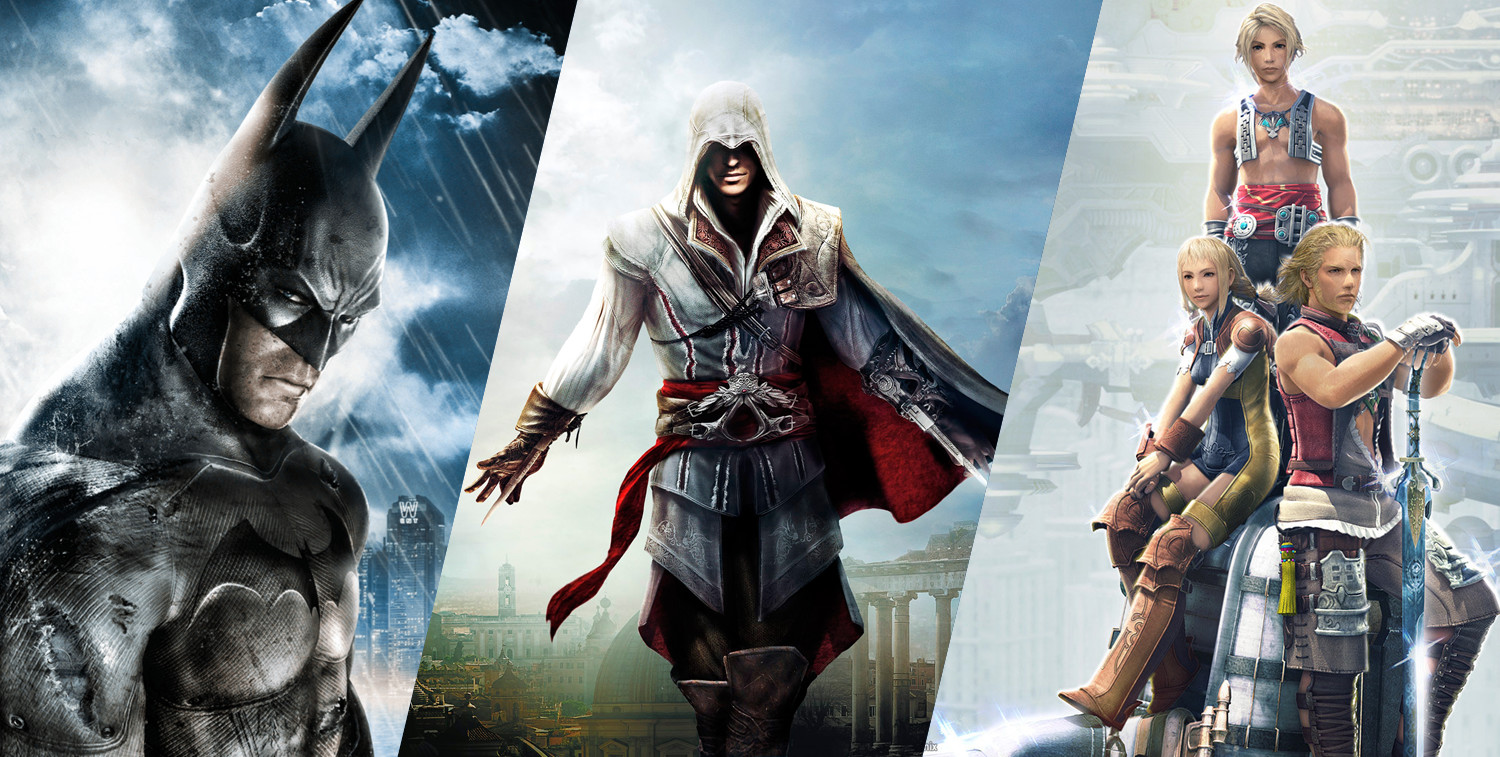
Few producers and developers can claim to work in one organisation on the development of multiple titles as diverse and prestigious as Batman: Return to Arkham, Assassin’s Creed: Ezio Collection and the Final Fantasy XII The Zodiac Age – but that’s the case with Richard Turek, with many more AAA titles to come.

There’s a strong appetite from the world’s biggest games studios to want to make bigger, deeper, better games, through parallel development on multi-platforms, full level design, downloadable content packages – or resurrect classic titles through remakes on new platforms. Either way, Richard and the games teams have a proven process and deep expertise in the field.

AAA Games – Forte of Virtuos

The current team of 40+ people is developing full levels and what Virtuos calls “exotic gameplay” with a top North American developer for an upcoming AAA adventure game. The game is scheduled to release autumn this year.  Exotic gameplay is a term, coined a few years back, where game teams (through intelligent partnerships) can add quality, depth and substance to their projects, above and beyond what they may have scoped out with their internal resources. 

Integrated External Resources

There is a sense at Virtuos that its partners are seeking a lot more than a simple staffing solution for their ambitious projects, these days. They want passionate, diversely talented teams that can drive a project as hard as any internal development team, and become an integral part of the organisation and projects.

This is especially true for parallel development projects where it is not just about making Art assets, weapons, vehicles and buildings, but about true co-development,  where creative input and strategic decision—making is a collaborative process between the games companies and their external developers.

“Starlink” - One of Virtuos‘ Many Parallel Development Projects

These companies now make it clear from the beginning that they aren’t looking for a flexible talent pool, but an extension of their own development team, a partner just as dedicated as they are, to making the best game possible. The depth of the relationships reaches new levels, and with access to proprietary engines and pipelines deeply integrated between the two parties, trust is a must.

There’s a strong will that companies like Virtuos become true extensions of core dev teams.  It’s easier said than done, but there’s a real need from developers to build these long-term partnerships because nobody wants to micro-manage 10 or 20 different vendors!  It takes time because teams get to know each other on a different level – getting in deep on core tasks, like sharing the backlog, task progress and risk log as one team. The belief is that driving conversations across different departments: Art directors, tech directors, Design Director, leads to a greater chance of success and true integration.

Goal Setting and Enablement

Staying focussed on shared goals has also lead to a high degree of success. During the collaborative creative process, there is nothing worse than having someone respond with; “that’s going to cost more money’’ when something is out of the agreed scope. Everybody knows how development works and that time + resources = money.

Game development can be fast and fluid, especially when the core teams are trying to “find the fun” to delight the end-user. For success, teams should expect rounds of iteration and must plan for it and embrace it. Obviously, when changes impact deadlines, sensible dialoge starts and the joint teams come up with options to achieve the best path for the game.

It’s clear the mammoth games companies know how to make great games - but companies like Virtuos know how to enable success. With over a 1,000 projects under its belt, Virtuos has seen it all! The company accesses and works with a huge amount of data, and adapts to different pipelines and genres to come up with custom solutions for each project. At the end of the day, AAA studios who want to make their games bigger while increasing their ROI will rely on major partners for their expertise in specialised game development services as well as flexible development work.

A key to successful AAA projects can often drill down to the strength of the personal relationships, and Virtuos truly believes in the continual flow of communications, dialogue, reporting and discussions across internal and external dev teams. If this is combined with a genuine will to be flexible and adaptable, at any stage of the project, good things start to happen – but it’s truly on the developer to offer this flexibility and understanding to support the client’s needs and even pre-empt them!

Quality Drives Success

Flexibility and the Personal Touch

A simple, more personal touch, is taking the time to get to know the team members. Getting to know one another, can help tremendously, as it builds deeper trust and even friendship! Chances are there will be regular communication with these people for the next 1 – 2 years. Being personable can help to smooth communication while still being professional. Instead of diving straight into the agenda, spending a few short minutes amount of time catching up, builds much-needed rapport.

In terms of being adaptable and flexible, Richard and his team recently completed a project that had a pre-existing, fairly unique, custom way of building levels. This process was completely new for his team whose entire experience was in the traditional level building. However, they were eager to adapt to the way their partner worked so that they could integrate seamlessly into their pipeline.

Before starting the project, Richard started with training and helping the team to adapt by getting as much documentation about it as possible, to build a list of carefully defined deliverables for each phase of the process. The next step was to collect in-game videos from previously created levels showcasing what to expect at each stage of the process. These videos helped to give a visual reference and made it much easier for everyone on the team to understand the expected requirements and work towards it. By the time the team completed their first two levels, they were experts in the process. In the coming months, production doubled in scale and the team adapted their milestones and deliverables around their partners’ pipeline.

Finally, a well-defined feedback loop can be critical to the success of a project and should not only happen at the end of the project but throughout the whole process. To find out what is and is not working and then ask for constructive feedback helps to improve relationships and make the project go smoother.

Sharing feedback early can save time and anguish at a later stage - there is no benefit to waiting until something is 100% complete before sharing opinions – and clients value the feedback. Providing updates throughout the creative process helps to give context and rationale for how to achieve the best possible results; highlighting issues encountered and how to fix them.  Sharing early ensures expectations are met and allows partners to speak up if they think it is going in the wrong direction – saving everyone from wasting time and effort.

 In conclusion, the successful co-production on a game really is a matter of the co-operation and drive of several teams to do all they can, in their power, to initiate healthy collaboration and feel like one team. The “Them and Us” scenario is a long-forgotten ancient history, and in this era of simple integration and easy communication, should never rear its ugly head again!

Thorough Planning and Great Communication!

About Virtuos

Founded in 2004, Virtuos Holdings Pte. Ltd. is a leading videogame content production company with operations in Singapore, Canada, China, France, Ireland, Japan, Korea, the United States, and Vietnam. With 1,600 full-time professionals, Virtuos specializes in game development and 3D art production for AAA consoles, PC and mobile titles, enabling its customers to generate additional revenue and achieve operational efficiency. For over a decade, Virtuos has successfully delivered high-quality content for more than 1,300 projects and its customers include 18 of the top 20 digital entertainment companies worldwide. For more information, please visit www.virtuosgames.com.

About Richard Turek

Serving as Senior Producer at Virtuos Games, Shanghai.

Richard has over 8-year’s game development experience. An expert on multi-platform development, project schedule management and Budget & Scope management, a seasoned leader and supervisor of large, multi-disciplined teams. With an eye for quality, detail and fun. Leading the charge to build exceptional games!

Virtuos Experts Talks #1: The Balance between Artistic Expression and Project Efficiency Needs Careful Management to Drive Success in AAA Games and Movies

Article / 17 July 2018

The first of a series of regular articles highlighting the learnings and best practice from Virtuos' global development, Art and VFX teams.

In this instalment, Nicodemus Mattisson, Director of Virtuos' concept Art Team, talks in-depth about how to balance the common conundrum between artistic expression and project efficiency.

"Playing tag with Old One Eye" by Nicodemus Mattisson

As concept artists, we use the world around us for inspiration and try to find new and interesting ways of re-assembling these inspirations and sources into content that engages players and viewers emotionally. Whether that is designing the airlock on a space station quietly orbiting an alien planet in a game or the empathetic sidekick teddy bear holding your hand through a dark forest in a movie. Or perhaps a combination of all of that.

In crafting new worlds and the characters that populate them, the rule you'll hear from any seasoned designer is not too deviate too far from the things you know. Your knowledge forms your understanding of the world and makes it relatable to you in meaningful ways. Some forms of knowledge are highly individual while others are universal, giving us as designers crucial tools in forging experiences that engage.

Skill, Practice and Feedback

Working to create these kinds of experiences takes skill, practice and consistent feedback and one of the things that designers of other types of media often overlook is the collaborative nature of game development where many disciplines come together to mesh graphics, code, sound and input together.

These are vastly different disciplines of work and understanding the larger framework they support and the limitations they pose on you as a designer is of great importance for seeing the original vision through.

In recent years Virtuos has championed a position known as "Closing the gap". This is a holistic approach to the work of crafting worlds and assets by closely emulating the production practices of the department or client we support.

One example would be our heavy emphasis on 3D tools, allowing 2D artists to construct their sketches in 3D for perfect linear perspective or using a standard body 3D mesh with some sculpting and poly-painting on top, to quickly visualize the shape and colour of a clothing piece or armour with perfect anatomical precision.


WIP 3D Model of "Stroggs 2016" by Nicodemus Mattisson


Painter Become 3D Artists

Production tools have become increasingly simple to use for the past fifteen years, so that even a classically trained painter can create complex materials and apply them to a 3D model with ease, with the abundance of ever-increasing compatibility. There was a time where the digital painting was just transitioning into interest by traditional painters. Online forums and blogs filled up with great artwork, but it took quite some time for the community to accept new workflows and ideas of improving upon the efficiency of the methods which they were using.


Final Concept Artwork of "Stroggs 2016" by Nicodemus Mattisson


It is this very mindset that has been nurtured in the Concept Department, in allowing our artists to train both as 2D artists brushing up on their fundamentals while also understanding how to effectively use 3D and rendering software to aid in production. The positive effects are apparent; It brings artists closer to 3D pipelines and offers the ability to hand over a rough model of work to the 3D artists, saving time and effort for everyone involved in the asset pipeline.

It also allows artists to focus on what is relevant and not be interrupted in their flow of ideas. Through empowering artists who might find a particular fundamental skill tough to wrap their heads around or time-consuming, it provides them with the opportunity to not only bypass the complexity of drawing it but also to experiment with designs, produce variations and deliver something with a higher degree of accuracy.

About Virtuos

Founded in 2004, Virtuos Holdings Pte. Ltd. is a leading videogame content production company with operations in Singapore, Canada, China, France, Ireland, Japan, Korea, the United States, and Vietnam. With 1,600 full-time professionals, Virtuos specializes in game development and 3D art production for AAA consoles, PC and mobile titles, enabling its customers to generate additional revenue and achieve operational efficiency. For over a decade, Virtuos has successfully delivered high-quality content for more than 1,300 projects and its customers include 18 of the top 20 digital entertainment companies worldwide. For more information, please visit www.virtuosgames.com.

About Nicodemus Mattisson

Serving as Concept Art Director at Virtuos in the wonderful city of Chengdu. With broad knowledge in concept art, matte painting and art production work, Mattisson has worked in the game industry for about 14 years serving high-profile AAA clients to indie studios visual benchmarks and assets for their interactive products and animation.