Virtuos Insider: Trong Hoan On Fusing Technology And Art

Article / 13 September 2021

If the game industry were to resemble a game of Dungeons and Dragons, the role of a Technical Artist would undoubtedly translate into a hybrid class. These talented individuals possess both the ability and creativity to sculpt and illustrate, as well as the technical expertise to create complicated software tools to aid their fellow artists in their work.

As a studio dedicated to producing digital entertainment based on some of the most renowned IPs in the world, Sparx* – one of several studios within the Virtuos Group – prides itself on retaining highly talented and motivated individuals to get the job done. Not only must one possess the skill to excel, they should also exhibit at least a silver of interest in games and film to truly feel at home.

In Trong Hoan’s case, that was no problem at all. Hoan spent his childhood days perfecting his skill with gaming classics, while cultivating an interest in art and technology. It’s paid off quite handsomely – these days, he’s an expert in anything from animation and rigging to crafting developer tools.

Check out the interview below to learn more about Hoan and what being a Technical Artist truly entails.


What were you working on before joining us at Sparx*?

Before working at Sparx* I was a Technical Artist at a small VFX house in Ho Chi Minh City, in Vietnam. I have also been an independent instructor, primarily of Artistic Anatomy, and of Rigging, Python Scripting and Digital Figurative Sculpting. Prior to my career, I studied abroad in the United States for 7 years.

Which project in your time at Sparx* was the most memorable one to you?

The most memorable project was a full-pipeline test I participated in, where I could see every department at Sparx – Modeling, Rigging, Layout, Animation, Lighting, FX, Compositing – come together to produce a finished sequence. I was very happy to witness how every team’s contribution fit into a greater whole.

What’s the proudest moment of your career so far?

I’ve had the opportunity to work on a lot of exciting AAA projects at Sparx*, which has been a fantastic chance to grow. Personally the highlights of my career were the moments when I managed to gradually produce tools of higher complexity that artists actually use daily, and feeling somehow that the ‘dots’ I had been putting down throughout the years are now starting to connect with each other. It’s been a truly amazing journey so far.

Could you explain a little about what Technical Artists like you actually do?

The shortest summary would be that a Technical Artist is usually expected to wear many hats. Troubleshooting technical issues for artists, working with ITs to set up equipment for new projects, writing tools to speed up workflows, foreseeing potential technical pitfalls, researching solutions to problems, writing technical documents to spread best practices, reading technical documents, undergoing training for new tools/software… these are just some of the things that we do.

What’s the best thing about being a Technical Artist at Sparx*?

To me it’s having the opportunity to work alongside my peers – other Technical Artists and Technical Directors, especially when they are far better than me in terms of technical experience and knowledge. I wake up every day feeling very inspired knowing that there are still plenty of new things to learn.

What’s a normal work day like for you?

It can vary a bit depending on our current projects. Some days I’d do some Rigging works, or provide some advice on Human/Animal Anatomy. My normal work day however has increasingly gravitated around coding – writing tools and fixing bugs – over the past years.

Do you think that artistic skills are more important than technical skills for Technical Artists, or vice versa?

Since the scope and definition of what counts as ‘Technical Art’ can be quite vast, the actual task at hand usually dictates whether the Technical Artist in charge should lean towards the artistic side or the technical side to achieve the best results. For example, aiding Character Artists to sculpt facial expressions that adhere to the Facial Action Coding System (FACS) would require more artistic vision, while providing helper tools for them to perform said task would require more technical input.

How important do you think research is when working as a Technical Artist?

I believe that research is not just an important step, but a vital one in keeping up with the industry’s pace. There’s also the constant demand to update and innovate within one’s field of expertise. However, I find that in order for research to be fruitful, a good foundational knowledge base is always required.

Tell us a bit about your personal life. How did you get exposed to technology and games?

I can still vividly recall a moment in summer 1998, when I gazed through a window at people at my elementary school having access to PCs, each using MS Paint to color in an image of the Statue of Liberty. I was mesmerized. Two years later my parents allowed me to attend a Pascal class filled with grown-ups who didn’t seem to want to be there. Those two instances must have been my first exposure to technology.

I eventually got carried away with drawing and all the things related to it, like Architecture, Animation and Fine Arts. Now, I’m finally back to dealing with technology again!

What sort of interests do you have?

I enjoy reading, and also doing small DIY projects for my living space.

What do you like to do to relax after work?

Foraging for good Internet memes! Besides that, as ironic as it sounds, I regularly pursue personal projects after work to avoid burnout. The things I dabble with can range from Artistic Anatomy sketches and studies, to some minor software tools that I would write for fun. I believe that these personal projects help keep me sharp and would eventually feed back into my professional work in many ways.

Do you have a favorite game, or a genre of games?

My junior high school years were about 20 years ago, which I spent living in a rural town in Vietnam. My buddies and I would completely lose our minds back then with games like Age of Empires I, Warcraft 2, and Counter-Strike. I wouldn’t be offended if someone were to call me sentimental; those are some of the fondest memories that I still hold dear today. Outside of video games, I also remember making simple toys by chopping bamboo and using rubber bands to make little catapults to play with my younger brother.

Is there anything you would like to say to anyone reading up about Sparx*?

Come join the Sparx* side! We can’t always reveal what we’re working on at any moment due to the NDAs and secrecy surrounding our projects, so what we do might not always be too clear for someone looking in. But the mere fact that we’re being so careful about what we’re working on should be proof enough that we’re always working on something exciting at the studio.
Virtuos Experts Talks #10: Treading New Battlegrounds: What Virtuos Learned About Developing for Stadia with PUBG

Article / 10 December 2020

The tenth in a series of regular articles highlighting learnings and best practice from Virtuos' global development, Art and VFX teams.

Background

In November 2019, Google released Stadia – its own gaming platform. Stadia’s primary unique selling point was that it functioned as a cloud gaming service; the player would be fed a high-quality stream of their game of choice, while the actual program and the computing power required to run it remained within Google’s server infrastructure.

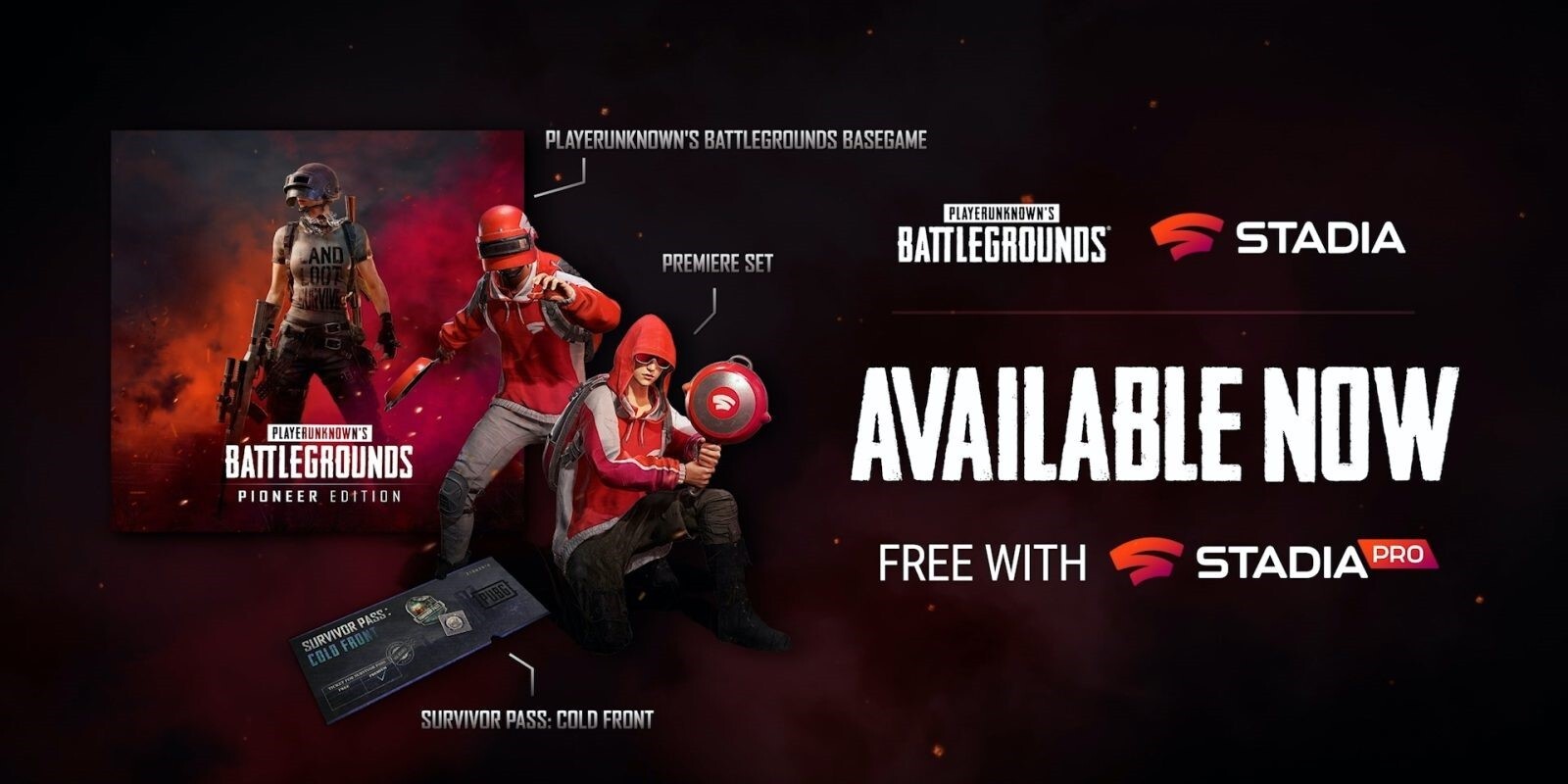
In line with the plan to release new games beyond Stadia’s initial launch, PlayerUnknown’s Battlegrounds (or PUBG for short) was selected as the first battle royale shooter to be adapted for the platform, with Virtuos executing the project in close partnership with PUBG Corporation and Google.


Mandate

The team working on PUBG for Stadia was charged with four objectives:

- To exhibit beyond any reasonable doubt that an adaptation of the game for Stadia was viable;
- To ensure stable framerate at all times;
- To upgrade and validate select middleware to allow Stadia support, and;
- To integrate Vulkan and Stadia support within Unreal Engine 4.16, to ensure proper rendering of the adaptation.

Challenges and Solutions

Throughout its development, there were several obstacles that the development team had to contend with for the adaptation of PUBG for Stadia.

Challenge #1: Stadia as a brand-new gaming platform

Unlike other consoles featuring years of iteration on their hardware and software, Google Stadia was an entirely new entity, which meant that the knowledge and experience required to develop and/or adapt a game had to be gained from the ground-up.

This, along with the fact that there were no pre-existing examples for reference, consequently presented the team with a project riddled with unknowns. Everything from the various features and functions of the platform, to the possible support of various control schemes was a question that needed answering before proceeding with the project proper.

The solution to this was a meticulous, comprehensive effort in researching what Stadia can offer and how it worked, while working against time to produce a proof-of-concept version of the game that could run on the platform.

Challenge #2: Laying the groundwork

Right from the start, the Stadia platform presented the team with two roadblocks to contend with. The first was that it featured an architecture based on a hybrid of Linux and Vulkan – a somewhat unique configuration. The second was that the version of Unreal Engine 4 used by PUBG did not support Stadia natively at the time.

In order to successfully show that adapting PUBG to Stadia was possible in the first place, the team first had to invest a significant amount of time and effort into implementing Linux and Vulkan compatibility to the game, while also modifying the UE4 engine to follow suit. Once that was done, the team’s focus shifted to upgrading the relevant middleware to support the platform.

The last and most important milestone for the team was to confirm that this set-up was able to run and render the game, and project the final stream successfully onto a test client device.

Upon verification that this was accomplished, the adaptation work consequently began proper.

Challenge #3: Maintaining stable framerates

As an online multiplayer shooter, it was paramount that PUBG for Stadia run seamlessly across all devices, with no latency nor framerate issues.

The latency part proved to be surprisingly manageable; there were little to no problems of the sort plaguing the team throughout the development process. In fact, the game ran without any hitches on days with decent internet connections, which is incidentally the deciding factor on whether or not a player would experience lag during gameplay.

The more intricate aspect of this challenge lay on the framerate side.

To achieve the best framerate possible, the team first analyzed the functions in the software’s program thread to learn which occupancy rates were higher, before optimizing said functions to reduce the occupancy rates. Next, they paid attention to the quality of the art assets used in-game; if the visual effects are set too high, the increased load on the GPU would may in turn affect the framerate. A balance thus had to be achieved between optimization and fidelity, the exact degree of which was agreed upon in another round of discussions.

To Stadia’s credit, the sheer processing power of the servers working behind the scenes meant that it was possible to achieve a stable framerate and reduce input lag while preserving graphical quality was exceedingly doable.

Challenge #4: Access to Stadia Dev Kits

The team that was assigned to tackle this project is based in Virtuos’ Shanghai studio. While having amassed significant experience in adaptations from prior projects, their location soon proved troublesome as they had no local access to the Stadia Dev Kits.

This issue was solved in two parts. First, part of the team was dispatched abroad to another Virtuos studio in Paris which had the dev kits onsite, allowing the selected personnel to interface with them in person. The rest remained where they were in Shanghai and continued their work via remote connections with the dev kits. This arrangement was met with huge success – since the conclusion of the project, Virtuos has progressively implemented more remote accessibility to various dev kits for its dev teams, allowing sustained productivity even while outside of studio premises.


Conclusions and Takeaways

The team behind the adaptation of PUBG for Stadia was able to conclude several new findings from their experience:

Stadia as a platform is indeed revolutionary. No downloads required, no loading screens, instant boot-up times, accessible on multiple devices including mobile phones and TVs means that players can enjoy unprecedented access to games no matter their location.

Aside from a decent network connection, not much else is required to run Stadia optimally. This also has the benefit of reducing latency by a large amount; on a good network connection, the team can hardly feel the effects of lag on PUBG, with the game running smoothly on Chrome.

One of Stadia’s underrated advantages is the elimination of virtually all cheats and hacks, due to the fact that the game is run entirely offsite, with none of the files stored locally and susceptible to manipulation.

Provided that a good network connection is available, and live environment is accessible, developers may have an easier time making games for Stadia, as it is possible to review the build remotely at any time, on a wide range of supported devices.

Existing middleware and tools compatible with Stadia are noticeably fewer compared to other contemporary platforms (at the time of development), which may be a possible hindrance for developers wishing to make games for the platform.

Remote connections to dev kits may likely be the norm in future for developers without direct access to one, and is already a reality in Virtuos today.

Clients are also able to review builds for Stadia games remotely at their location of choice, without the need to use physical dev kits. The hassle of delivering hardware is virtually eliminated in this case, granting an understated advantage over other platforms (especially when factoring in global logistic issues due to the COVID-19 pandemic).

With the completion of this adaptation, Virtuos has gained significant experience in terms of game development for Google Stadia, and is now already working on several new adaptations to bring more games to the platform, giving players access to the ‘Click and Play’ experience everywhere.

About Virtuos

Founded in 2004, Virtuos Holdings Pte. Ltd. is a leading videogame content production company with operations in Singapore, Canada, China, France, Ireland, Japan, Korea, the United States, and Vietnam. With 1,600 full-time professionals, Virtuos specializes in game development and 3D art production for AAA consoles, PC and mobile titles, enabling its customers to generate additional revenue and achieve operational efficiency. For over a decade, Virtuos has successfully delivered high-quality content for more than 1,300 projects and its customers include 18 of the top 20 digital entertainment companies worldwide. For more information, please visit: www.virtuosgames.com

Virtuos Experts Talks #9: How Virtuos-Sparx* Successfully Implemented A Crash Course on Remote Working

Article / 10 December 2020

The ninth in a series of regular articles highlighting learnings and best practices from Virtuos' global development, Art and VFX teams.

In this installment, Technical Director Fernando Castillo and Technical Group Producer Huy Nguyen talk about how they tackled COVID-19 and remote working.

As the COVID-19 pandemic makes its way across the globe, millions around the world have taken to social isolation at some point in order to slow the spread of the virus. This massive shift in societal norms has consequently forced businesses to suspend operations or to rapidly adapt by any means necessary. As one of the few industries heavily reliant on computers as a means of production and distribution, digital entertainment companies such as Sparx* have largely remained operational by swiftly implementing remote working arrangements.

In Sparx*’s case, working from home was largely a concept that was only considered theoretically; all the pieces required for it to function was available, but a definite playbook had not yet been drafted, much less trialed.

At the time of writing, Sparx* has already reopened its studio premises, after having completed three full weeks of self-imposed work-from-home arrangements for all staff during the month of April this year. The COVID-19 risk, while not completely eradicated, has been reduced to such an extent that businesses in Ho Chi Minh City (where Sparx* is situated in) have already begun resuming operations.

All in all, the remote working experiment was a success, although there were plenty of lessons learned along the way. This article will attempt to explain those discoveries in more detail.

The Situation

Sparx*’s first inkling of the impending crisis surfaced in the days following the Lunar New Year celebrations.

By this time, the coronavirus had already been recognized as a major issue by the studio management, which prompted high level discussions regarding the proper measures needed to mitigate the risk of infection.

The idea of closing the entire studio was floated in the early stages, but was eventually discarded due to the following reasons:

  • Closing the studio would cause its commitments to lapse, potentially damaging Sparx*’s reputation and losing clients as a result.
  • Some staff might have to take pay reduction/unpaid leave if the lockdown prolonged, as this happened to other companies in the industry.
  • An inoperative studio would mean no means of securing new projects for the duration of the closure, which at the time had no definite end date in sight.

The only other alternative was to send people home, but to keep the studio open by allowing them to work from home. This proposal quickly gained majority favor, and an emergency strike team was hastily formed to organize and execute the shift towards remote working.

Within days, an action plan was drafted up, with trials beginning that very weekend.

Case Study: Riot Games

Riot Games was one of the first clients to reach out and inquire about Sparx*’s status regarding the COVID-19 situation. At that time, the plan to shift towards full remote working had just been drafted, which meant that they were one of the first clients to be notified about the studio’s intentions. In addition, Sparx* also shared their proposed security method and projections for anticipated productivity loss when full remote working is achieved.


The eventual decision to select the teams working on Riot Games projects as the spearhead of this undertaking was based on several factors:

  1. Riot Games showed explicit concern regarding the staff’s wellbeing. Throughout the meetings, Riot continuously stressed the importance of ensuring the safety of Sparx*’s staff over their productivity output. Riot was also receptive to the proposal to implement full remote working, even though it was still unfamiliar territory ground for the studio.

  2. Punctual delivery of Riot’s project milestones was critical. As Riot’s offerings are exclusively live service games (e.g. League of Legends), all future content is planned well in advance, which meant that delays in production would be highly disruptive for Riot as a client. Ensuring that Riot’s production pipeline could continue uninterrupted was therefore critical.

  3. Riot Games is considered a critical partner for Sparx*. With this unique relationship between the two entities, careful management of their projects was deemed necessary.

Implementing Remote Working: Problems and Solutions

There were three distinct issues that were encountered throughout the planning, testing and execution of the remote working arrangements, which were subsequently resolved via various measures.

Technical challenges

As an external developer, Sparx* often handles projects involving a myriad of work scopes, tools and game engines, which consequently require unique set-ups in order to function correctly.

While not an issue in a standard office environment, the incompatibilities of some game engines turned out to be particularly problematic when handled via remote working. This required extensive testing for multiple applications in order to find a suitable configuration that can support their use.

Another potential problem anticipated by the studio was the quality of equipment that staff members had access to at their homes, such as monitors, connection cables, or drawing tablets to name a few. In a pre-emptive move, Sparx*’s HR department sent out online surveys within the first few days to gauge staff readiness – if a person was found to not possess the required components, the studio would allow them to borrow what they needed from the studio.

In addition to hardware, all staff were also required to familiarize themselves with several remote desktop applications to ensure uninterrupted workflow:

  • TGX: a remote desktop application that utilizes a compression algorithm to increase bandwidth and optimize performance. This allowed Sparx*’s artists and animators to proceed with their work when interfacing with offsite workstations, with no disruptions caused by connection issues.
  • RemoteFX: An extension by Microsoft, RemoteFX is a Remote Desktop Protocol that optimizes the transfer of graphics information through remote connections, an advantage readily taken by the studio’s FX artists.
  • Datacloak: An encryption program used for securing data housed in servers and workstations.

The heavy reliance on IT equipment and the ability to connect to them necessitated a well-established support system to ensure their reliability, prompting the following actions:

The creation of a technical support group chat on Zalo (a local social communication platform), and

Assigning one Technical Artist and one IT executive to each team, for the exclusive purpose of addressing any technical issues affecting remote working capability.

The solving of these pain points consequently allowed Sparx* to proceed with the implementation of remote working for all studio staff.

IP Protection

As an external developer, security and client’s IP confidentiality at Sparx* is paramount. 

Sparx* therefore reached out to the clients for each active project, informing them of their plan to implement remote working for the entire studio and providing details of its execution before formally asking for permission to do so. Only when proper authorization is secured can Sparx* proceed with its plan to send its staff home.

Fortunately for the studio, every single client contacted was willing to allow that to happen, starting with Riot Games. At the conclusion of the remote working arrangement three weeks after implementation, Sparx* had succeeded in maintaining all IT security certificates, Working remotely using the right technical solutions is just as secure and Sparx* observed that the autonomy and trust conveyed to staff translated into greater care assigned to confidentiality.

Productivity

The transition to working in a shared office environment to working remotely from home requires a change in mindset. In the first few days of the remote working arrangement, Sparx* encountered a drop in productivity amongst the staff.

The studio however recognized that the drop may only be temporary, brought on by a ‘culture shock’ of working from home for the first time. To inspire an increase in productivity, the studio launched several initiatives, including a limited-time event that aimed to encourage artists to hit assigned milestones for set rewards.

These measures, complemented by the studio’s culture of mutual encouragement and constant communication eventually brought about a recovery in productivity rates. At the end of the remote working arrangement, Sparx* was found to have completed all forecasted deliverables set for the studio’s teams.

“The WFH transition with Virtuos-Sparx* was extremely smooth and well documented the entire way. We were kept up to date on status of blockers and what the team was already doing to address them. Once we made the full transition, it took us one week to get back to the same cadence we came to expect with in house developers. Super impressed!”, says Sarah Reinstein – Producer at Riot Games.

Conclusion

A few data points can be gathered from this experiment in remote working:

  • Sparx* sent its staff home in batches of 20–25 people, with the last batch dispatched right before the order for social distancing was issued by the Vietnamese government.
  • Over 400 studio members in total were sent home for the sake of the staff’s safety.
  • The total time taken to implement remote working, from planning to execution, was 2–3 weeks.
  • The remote working arrangement lasted a total of 3 weeks.
  • Overall productivity remained at 100 percent.

While Sparx* has been ultimately successful in achieving full remote working capability through effective troubleshooting of various issues, the major contributor for its success is arguably the level of cohesion exhibited by each studio member throughout the experience.

Sparx* boasts great teams not just in its production departments, but also its administrative ones as well – Management, HR, IT and Internal Communications. With their help, the studio as a whole was able to remain alert by actively monitoring the rapidly evolving situation, and react accordingly. The studio-wide communications channels were also set up to be wholly transparent, which allowed for consistent messaging to allay fears and dispel rumors.

Besides the concerted efforts of the administrative teams, the studio culture itself also played a significant role in ensuring a smooth transition to remote working; the ingrained sense of mutual cooperation and morale upkeep became the pressure release valve that kept the studio united in purpose as they remained isolated in their individual homes, complemented by numerous grassroots activities aimed at preserving that connection throughout this period of time. For Sparx*, this was the secret ingredient that made it all possible.

About Virtuos

Founded in 2004, Virtuos Holdings Pte. Ltd. is a leading videogame content production company with operations in Singapore, Canada, China, France, Ireland, Japan, Korea, the United States, and Vietnam. With 1,600 full-time professionals, Virtuos specializes in game development and 3D art production for AAA consoles, PC and mobile titles, enabling its customers to generate additional revenue and achieve operational efficiency. For over a decade, Virtuos has successfully delivered high-quality content for more than 1,300 projects and its customers include 18 of the top 20 digital entertainment companies worldwide. For more information, please visit: www.virtuosgames.com

Virtuos Experts Talks #8: Building A High Quality Procedural Effects Pipeline

Article / 10 December 2020

The eighth in a series of regular articles highlighting learnings and best practice from Virtuos' global development, Art and VFX teams.

A Brief History

Ever since its humble beginnings, Virtuos has relied on a comprehensive set of tools to provide art, animation and game development services to clients worldwide. Houdini is one such tool that has seen extensive use in the making of both games and film.

Virtuos first began using Houdini to animate scenes in TV series, often in tandem with 3D rendering programs such as Maya or Mental Ray. One prominent example can be found in Star Wars Rebels, with various VFX such as the molten metal effects caused by lightsabers being made in Houdini. The software is also primarily responsible for creating the laser and ship destruction effects found in the space battle section at the end of Season 3.

Case Study: Age of Empires II: Definitive Edition

As the long-awaited remaster of a true RTS classic, Age of Empires II: Definitive Edition was a project that demanded meticulous care and attention, which meant that no expense was spared in ensuring that every detail was updated to the highest quality. True to this mandate, the final version of the game sported numerous features, including 4K resolution support, a richer color palette, better lighting effects and redesigned units and base structures.


Part of the scope for redesigning the structures included a graphical fidelity upgrade in the destruction effects. As the majority of the core gameplay loop revolved around the construction and leveling of these structures via battles and sieges, it was paramount that the effects used to depict crumbling buildings were of the highest quality possible, while still retaining some uniqueness in the manner of destruction across a wide variety of structure types. The ability to zoom in closer to the game environment also necessitated a destruction sequence that not only had to be smooth in terms of frame-rate, but also required the textures to hold up under close scrutiny.

The Problem

To ensure high-quality visual effects of any sort, the most obvious solution would be to assign a dedicated artist to manually create the animation itself. But that wasn’t feasible in this case, because of one overarching reason: there were just too many structures to animate by hand within a reasonable amount of time. Even if it were possible to do so, the resulting time and budget constraints would very likely have forced down the overall quality of the destruction effects.


The need to produce the required effects in an acceptable quality within these imposed restrictions meant that another alternative had to be found.

Generating Procedural Destruction Effects with Houdini

One of Houdini’s major selling points is the ability to generate complex simulated effects, but its true strength lies in its procedural nature and the ability to create a setup once and having it work with different input geometries. This justified its adoption as the primary method to create the destruction effects in Age of Empires 2: Definitive Edition.

Before the team began work on production, they first had to create a custom tool to handle their needs. This tool was designed to provide an array of editable parameters to the Houdini team, which would affect the destruction effects in such a way that allowed for maximum customization while ensuring physical and visual consistency. Aside from that, it also supports the automated generation of a constraint network, relative to the type of material specified. This allows different building materials in the game to simulate resistance to external forces realistically; wood will typically bend before it splinters, while stones will crumble directly. Aside from that, the tool is also able to handle other materials such as fabrics, which would be processed through a cloth simulation pipeline.


With the development of the tool complete, the Houdini team proceeded with the creation of the destruction effects, using building models created by the asset department from Virtuos. Each of the models was built from the ground up and designed to be almost identical to the version found in the original game. Once built, the model file was exported as Alembic format (.abc) for use within Houdini.

The artist assigned to the task then generates different variations of the destruction effects by tweaking a limited array of parameters, displayed in an easily-accessible interface provided by the custom tool mentioned earlier.

One of these parameters concerns the physics of each type of building material – wood, metal or stone, among others. This drives the way in which the structures behave as parts of it fracture and fall apart, making the destruction effects look more realistic. 

Once satisfied with the fracturing process, the artist responsible for that building proceeds to link several fragments of it together with an ‘unbreakable constraint’. When a building is destroyed, it splits into multiple pieces and collapses. Linking pieces together with this constraint allows larger pieces to survive intact, creating the illusion of organic destruction and the formation of ruins, rather than a meaningless pile of debris.


At this point, the destruction effect would be considered close to completion. The artist makes some additional cosmetic changes, fine-tuning the animation by arranging specific sections of the structure to fall away in a more visually-appealing sequence, before finally compiling a playblast for approval by the Art Lead or Director. If deemed satisfactory, the destruction effect is subsequently exported to 3dsmax for the rendering process.

Results and Conclusions

Throughout this part of the project, the development of the custom Houdini tool proved to be the most time-consuming task, taking two weeks in total. Once that was complete, it was smooth sailing; the Houdini team managed to generate and polish the animations used for every building in the game within a matter of hours. In the end, each building possessed a destruction effect that while unique, still retained a consistent destruction behavior that fits within the aesthetics of the game.


The time spent working with the procedural generation tool in Houdini has revealed several noteworthy points:

  • It was highly useful for generating bespoke animations relatively quickly and without much difficulty.
  • The time saved allowed the Art team to devote more attention to the overall art direction for Age of Empires II: Definitive Edition.

Based on this success, Virtuos now plans to capitalize on it by concentrating on the following areas:

  • Substantially expand the existing Houdini team.
  • Start an internal project to develop and connect even more tools into Houdini for even more versatility, such as using Houdini to also procedurally generate buildings for instance.
  • Construct an ever-growing library of digital assets for use within Houdini and/or game engines.
  • Look for more opportunities to utilize Houdini in terms of procedural landscape generation in other projects, including perfecting our procedural assets placement solution to automatically generate object-dense environments (e.g. forests).
  • Further enhancing procedural level creation capabilities in 2020.

There is no doubt that procedural and AI-assisted technologies will play a much bigger role in the games industry in the years to come, and that Virtuos fully intends to leverage them in its ongoing mission to deliver top-tier art assets for games.

About Virtuos

Founded in 2004, Virtuos Holdings Pte. Ltd. is a leading videogame content production company with operations in Singapore, Canada, China, France, Ireland, Japan, Korea, the United States, and Vietnam. With 1,600 full-time professionals, Virtuos specializes in game development and 3D art production for AAA consoles, PC and mobile titles, enabling its customers to generate additional revenue and achieve operational efficiency. For over a decade, Virtuos has successfully delivered high-quality content for more than 1,300 projects and its customers include 18 of the top 20 digital entertainment companies worldwide. For more information, please visit: www.virtuosgames.com

Virtuos Experts Talks #7: Interview: Xavier Rozé and Paul Loumouamou on Co-Engineering Assassin's Creed® Liberation Remastered

Article / 10 December 2020

The seventh in a series of regular articles highlighting learnings and best practices from Virtuos' global development, Art and VFX teams.

In this installment, Technical director Xavier ROZÉ and Game Producer Paul Loumouamou talk about their exciting and challenging co-engineering project — Assassin's Creed® Liberation Remastered.


The Assassin's Creed® franchise has a unique place in the gaming world. Since Assassin's Creed release in 2007, the series has released 11 titles, which have always maintained a high quality of production. Now Assassin’s Creed® Odyssey is taking the franchise to the next level.

A few years ago, Virtuos became involved in the adaptation of this legendary series, taking Assassin's Creed® The Ezio Collection from PlayStation® 3 and Xbox 360 to PlayStation® 4 and Xbox One with post-effects improvements.

This time, Virtuos has a greater challenge — co-engineering Assassin's Creed® Liberation Remastered. Technical Director Xavier Rozé and Game Producer Paul Loumouamou from Virtuos' Paris studio are the project's key players. They were excited to share their expertise on how this tough mission accomplished.

What role did the team play in developing Assassin's Creed® Liberation Remastered? What do you think you and your Virtuos team brought into the game?

Paul: Our role was to adapt Assassin's Creed® Liberation so it is playable on machines that are more powerful: Xbox One, PlayStation® 4 and PC. However, our main mission was to improve the game's graphic level so that it would reach the visual quality of a modern next-gen title. We wanted to make sure this would match the visual benchmark of the machines it has played on, which are much more powerful than the console of its original game. To achieve this, Virtuos provided a lot of technical and creative expertise by implementing new graphics features such as Physically-Based Rendering (PBR).

Assassin's Creed® Liberation Remastered belongs to the Assassin's Creed® Odyssey's season pass. You've worked on the Assassin's Creed® series before, how does this compare to your previous projects, especially the Ezio collection?

Paul: We have had many successful projects that are similar to this and have accumulated a vast amount of experience in adapting games. But this time around, we modified even more things than on The Ezio Collection. In Assassin's Creed® Liberation Remastered, we added more post-processes, reworked the rendering and improved the lighting. We even modified the gameplay with new features, such as free-aiming, and reworked many controls, like the canoe transportation system.

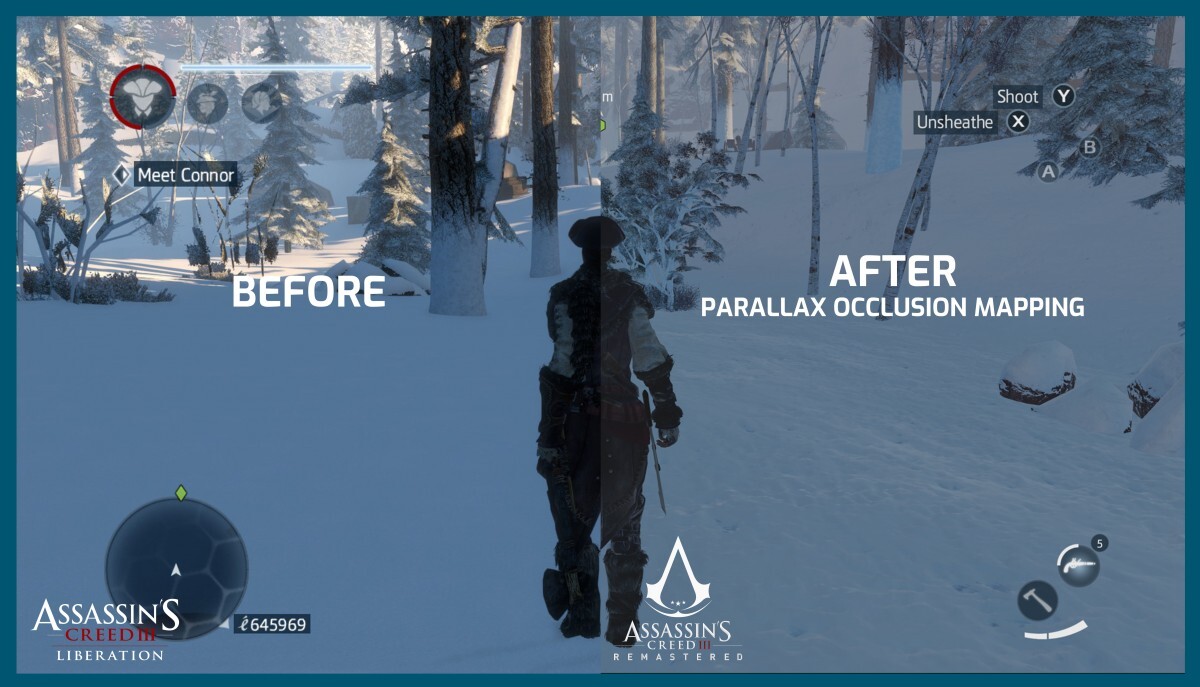
Xavier: We have also strongly enhanced existing surfaces to a much higher quality. We've integrated a dynamically tessellated water system to render swamps and seas with faithful real-time wave behaviors and implemented a parallax occlusion mapping method to bump the relief of the grounds, especially the snow surfaces.


Was the game being developed on three platforms simultaneously? How was the development process balanced across all three platforms?

Paul: Yes, we started with the PlayStation® 4 and Xbox One version and we started working on the PC version after a few months, so all three platforms were being developed at the same time. Both console versions were almost identical from a gameplay and visual point of view, whereas the PC version was much more specific. We had to take into account the hardware gap between PC and other consoles to make sure all three versions delivered the same gameplay quality in different technical conditions.

What are the gaps and differences you mentioned between PC and consoles here?

Paul: The biggest technical difference comes from the hardware itself. PlayStation® 4 and Xbox One are the same for all users while PCs have many different hardware configurations. This difference required us to do a lot of testing to avoid problems linked to particular components. An example would be how NVIDIA and AMD graphics cards do not work the same way and can therefore cause different bugs. There are also other differences such as keyboard controls and the differing PC resolutions that have a significant impact on the game's UI.

Have you worked on projects using Anvil engine before? What are the characteristics of this engine? What are the advantages and disadvantages of both proprietary and commercial engines from a development perspective?

Paul: Yes, we used the same engine for The Ezio Collection. Anvil has a “what you see is what you get” kind of philosophy as it's similar to commercial engines like Unreal Engine 4 or Unity. Everything can be done inside the editor. It's really helpful when you want to iterate quickly. Commercial engines are easy to learn and can work with many different types of games, but they can be harder to optimize and might not perform as efficiently as proprietary engines designed for specific types of game.

Xavier: Anvil has been designed with open-world in mind from the beginning. This allows the engine to support strong level content streaming without trouble regarding the framerate, the content density and the dynamic living environment.

Did the team encounter many iterations during the Assassin's Creed® Liberation project? What types of iterations were encountered?

Paul: We worked closely with Ubisoft Barcelona, which worked in parallel on Assassin's Creed® III Remastered. We worked together to improve the overall quality of the games and the harmony between the two. A good example of our iterations on Assassin's Creed® Liberation Remastered is the PBR, where we had to constantly tweak the post-processes and lighting to take advantage of our new materials.

In recent years, due to the continuous improvement of hardware performance, Physically-Based Rendering has been widely used in real-time rendering of PC and console games. To what extent do you think this new rendering pipeline has changed the development?

Xavier: PBR is a new lighting model more accurately based on realistic optical formulas. This new technique has really spread with PlayStation® 4 and Xbox One. I think PBR has simply allowed the video game industry to enter a new age of visual quality because it creates a universal standard that all production teams can build on. PBR offers us the tools and metrics to ensure the player gets fully coherent rendering scenes which sublimate the intent of the original art direction.


What was the unique thing about the lighting through PBR rendering?

Paul: The unique thing is the link between the lighting itself and the different reactions of the materials. We had to rework the lightning to take into account how our new materials would react in the same environments from the base game. It was crucial to understand and control all of these interactions to retain and enhance the original game's atmosphere without heavy alterations.

Xavier: Lighting with PBR offers the opportunity to reveal what the materials really are and how different they look to each other. The player can immediately distinguish the metallic buttons on a leather coat and observe the oily skin of a character behind a silk scarf. This brings the player into a whole new level of immersion.


Were there any challenges with PBR rendering during the co-dev of Assassin's Creed® Liberation Remastered?

Paul: We had two main challenges; maintain the artistic direction and implement PBR in the game in a short timescale and with a small team. To address the problem of artistic direction, we organized weekly reviews based on a side-by-side comparison with the old game. This enabled us to highlight what we might have lost compared to the previous version and to continually correct our trajectory.

Xavier: The biggest challenge, in my opinion, has been to make the use of PBR instantly obvious for any fresh eyes looking at it. During the production, we would compare the original and remastered versions and we got more and more familiar on the content we compared. We came to a moment where a comparison outlined a big difference for us, but this difference was almost not perceptible to a newcomer! There, we realized that we needed to become stricter in our review expectations, so we would never forget that the results must be obvious for all newcomers to the game.

Technology is influencing art, changing art, redefining art. How can technology better serve the art performance of gaming coherently? What do you think of the paradox between art and technology in game industry?

Xavier: As technology is advancing, it provides new possibilities and new ways of thinking. The art of tomorrow can emerge from unexpected combinations of practices issued from the technologies of today. This is the reason that pushes us to improve current technologies, so that we can give new means to artists for fully expressing their messages to players. This is a cycle where technology should always be seen as an opportunity and not as a constraint for art expression. Whereas technology is a fully determined flow of logic, art is a muddle of effects feeding human emotions according to a global intent. The challenge when building a game is combining the strict structure of technology with the messy nature of art. This will produce a more coherent and realistic experience for players to immerse themselves. Finally, the more present the technology, the more visible the art.

You have previously worked on several other Virtuos co-development projects, such as Vampyr and LA Noire. What do you think of co-development after having these valuable experiences? What effect do you think co-development has on the AAA game industry?

Xavier: Co-development is a marvellous opportunity to share experiences between our client's teams and ourselves. This solution merges different team's profiles, converging to a solid bulk of expertise and processes which become reliable enough to lead a project to a safe end.

Co-development only happens when needed, for a specific and well-determined target. Which lessens risks and streamlines the production effort thanks to teams experienced working in various situations and client expectations.

Thanks to Xavier and Paul for taking the time to share their valuable perspectives and stories. Make sure to check out Virtuos Expert Talk Series here. Assassin's Creed® Liberation Remastered and Assassin's Creed® III Remastered released for the PlayStation®4 computer entertainment system, the Xbox One family of devices including Xbox One X and Windows PC on March 29, 2019.

About Virtuos

Founded in 2004, Virtuos Holdings Pte. Ltd. is a leading videogame content production company with operations in Singapore, Canada, China, France, Ireland, Japan, Korea, the United States, and Vietnam. With 1,600 full-time professionals, Virtuos specializes in game development and 3D art production for AAA consoles, PC and mobile titles, enabling its customers to generate additional revenue and achieve operational efficiency. For over a decade, Virtuos has successfully delivered high-quality content for more than 1,300 projects and its customers include 18 of the top 20 digital entertainment companies worldwide. For more information, please visit: www.virtuosgames.com

About Xavier Roze

Serving as Technical Director at Virtuos Paris Studio.

Xavier ROZÉ has over 16 years' experience in the game industry, with solid experience on performance optimization, especially in streaming open worlds on unreal engine 3&4, rendering and consoles development.

About Paul Loumouamou

Serving as Game Producer at Virtuos Paris Studio.

Paul LOUMOUAMOU has over 3 years of experience in the video game industry, with a dedicated producer and a gameplay programmer technical background. He has experience in Team management, Scrum / Agile methodology and Gameplay Development / Game Producing on PC and consoles.

Virtuos Experts Talks #6: Interview: Training Is At The Heart Of Every Successful Operation

Article / 10 December 2020

The sixth in a series of regular articles highlighting learnings and best practices from Virtuos’ global development, Art and VFX teams.

In this installment, Learning and Development Director of Virtuos-Sparx* Studio - Samuel Stevenin talks about why training is crucially important to employees and companies, and how training system of Virtuos was developed.

It’s no secret that offering internal staff training can drastically improve the skillset and aptitude of a team. Virtuos certainly buys into this philosophy with more than 1800 people trained so far!
For many years, the company has effectively managed training through a number of activities from day one of an employee’s journey. It’s a simple:

  • Initial on-boarding training ensures the level of the intake of juniors reach industry standards
  • On-going in-class training to ensure artists stay up-to-date with new tools and workflows
  • Ad hoc sharing sessions adds layers of good information – based on good practice and professional tips


Virtuos’ belief is that this format is reaching its limit. There are 3 clear factors at play:

  1. It is no secret that a new generation of employees are eager for fast and simple learning. If we’re honest, their ability to focus is short and they become less and less interested in long training sessions. Though they are able to adapt easily to new technology and tools, they are less enamoured by classic learning. Learning methods need to adapt to the “social-media” culture: short, simple and attractive!!
  2. If we look at other factors - Let’s face it, turn-over rate is becoming a threat we need to deal with - the market is very competitive and artists have more and more opportunities to jump from one company to another. The challenge is now to shorten the learning curve of our artists so they can bring the most of their talent as early as possible – It’s a win-win.
  3. Finally, on this topic – Virtuos’ staff are fully focused on the job at hand and developing fundamental knowledge, i.e. core skill like anatomy for characters, skill that take tens of years to master, is extremely difficult, as projects and immediate needs are often taking over long term development.

TRAINING DEMANDS CHANGING RAPIDLY


So how does Virtuos overcome these new challenges? Quite simple, it has been to fragment information into small chunks and expose artists to it as often as possible, through different media channels. This exposure to knowledge is closely related to storytelling, and Virtuos believes that knowledge can be acquired through the layering of simple tranches of information, like learning long stories by reading the same books over and over, one chapter at the time.

Fragmenting the information was made possible by developing a new learning format, totally modular, allowing Virtuos to use existing content as small standalone units or larger ones by combining them. When building this format, a great deal of effort has been made to make the content as vocational as possible, by stripping out information not directly connected to it and also by injecting a ton of experience and best practice learned on the projects from the team.

NEW CHANNELS FOR LEARNING


Another aspect of this iterative exposure has been to transfer knowledge through channels that were, until recently, not used for that purpose. The best example is English learning, Virtuos was (and is still is) heavily investing in ensuring Virtuos’ leaders to communicate in English - but the change here has been to make the English language training totally business-orientated.

The learning of deep English business vocabulary better serves the requirements of our projects and clients. The case studies come straight from our project experience. This help us not only make our teams be business-English ready sooner, but it has been a great source of motivation for them as they were quickly able to use what they learned in-class almost right away in their work. Through English learning our artists are exposed to learning content that help directly in their development as artist.


SPECIALIZATION


The last aspect of this change of strategy is about refining the learning path of our employees and orienting them toward specific expertise. The new learning management system that will be released in a few week will give us the ability to monitor the development of our employee and take into consideration their area of high performance and preferences to orient their career toward specific area of expertise. This specialization answer obviously a business need, the time of employee “generalist” - able to take on any project - is gone, we are fragmenting our large team in small units of specialist. Grouping people with high motivation in a specific domain allow us to grow fast in areas for which our capacity was too few like lighting, VFX or Houdini.

Right now we are at this very exciting time in which all our plans are finally emerging into concrete actions. The reaction from our artists has been excellent so far, looking forward 2019 and a full-scale implementation!


About Virtuos

Founded in 2004, Virtuos Holdings Pte. Ltd. is a leading videogame content production company with operations in Singapore, Canada, China, France, Ireland, Japan, Korea, the United States, and Vietnam. With 1,600 full-time professionals, Virtuos specializes in game development and 3D art production for AAA consoles, PC and mobile titles, enabling its customers to generate additional revenue and achieve operational efficiency. For over a decade, Virtuos has successfully delivered high-quality content for more than 1,300 projects and its customers include 18 of the top 20 digital entertainment companies worldwide. For more information, please visit: www.virtuosgames.com

Virtuos Experts Talks #5: Making Games Is Fun, But Most Projects Have Their Fair Share of Ups and Downs!

Article / 02 November 2018

The fifth in a series of regular articles highlighting learnings and best practice from Virtuos’ global development, Art and VFX teams.

In this instalment, Executive Producer of Virtuos Chendu Studio - Lukas Kodr tackles the delicate subject, of how to handle an emergency on a project!

At Virtuos, as Executive Producers, we get to oversee pretty much every project and proposal that our teams are, or maybe, involved in – the role of EP at Virtuos is not just a game design and production role, but an all-encompassing project and time management affair, from Day one. Typically there are three distinct types of projects that may materialize.

First, there are Regular projects that come in as fun one-time opportunity and all a Producer needs to do is synchronize the pace of projects coming in, balanced with the capacity of teams being available as they finish previous games.

Usually, you have a good idea how the project might conclude, a few months in advance and you can sit down with the client and tune with them so that they fit well to the skillset, timeframe and budget available.

The second project types are grouped as long-term collaborations with clients that span across multiple games. Our team gets fully integrated into the client's pipeline from the outset, and typically there is very little difference between our developers and the client's internal team. All pretty smooth really!

This Is An Emergency – React Immediately

There is one other, much-maligned group – the bona fide Emergency projects throughout the years we get used to the very nature of our business - we do not often get called when things are going really well, but often when a project feels like it is in trouble – on these projects, we get compared to a Coastguard coming to rescue a sinking ship. When you’re juggling multiple projects, it is hard to make sure resources are readily available and ready to move in on short notice, but at Virtuos, it is part of the executive producer's job.

It is obvious – but it is pretty impossible to keep a hundred or more developers idle at any given moment, just in case someone needs them, so the key to rapid response is flexibility and cooperation among different studios and divisions. BUT, we’ve pulled it off, a few times…

I remember it was the beginning of November. All projects were busy getting their milestones in before Christmas, negotiations to fill vacant capacity slots in Q1 were well underway – it was “business as usual”.

Christmas – A Time to Share Glad Tidings

And then, you guessed it…… the call for urgent, emergency help came in - A development director from a major developer & publisher was given a seemingly impossible task to deliver a massive amount of level art and gameplay content in about six months. During our initial discussion, we were looking at the number of assets required (as well as technical and QA support, because all these assets needed to be fully integrated into the build) and the number of required people were pretty scary. The calculations were showing 60-80 developers starting on the next day and crunching all the way until final deadline……

After a brief check with our studio's art planning manager, all we could spare at that time were 20 people with exactly the right skills. It was clear that this would have to be a cross-studio project! To the Bat-phone!! After a few hastily arranged conference calls, we established that there were actually people available in other locations. The drawback was that they would not finish their projects at the same time and their skills were close, but not an exact match – What to do?!

This is where it got really tricky. An obvious solution would be to check if we can transfer people from other projects which were currently in progress (something we try to avoid at all costs), so no to that one! It takes time for new people to get familiar with a particular project, pipelines and tools and it would not be fair to our current clients to suddenly replace people they are already used to cooperate with.

No Problem Too Big To Fix!

A few sleepless nights, and a day or two later we finally had a breakthrough. Originally we were thinking of having closed teams responsible for levels on their own. This makes the most sense as far as development is concerned, but it also requires same type of lead at all participating locations. Unfortunately, this was not the case, as one studio had quite a lot of juniors available, while other studios had mostly seniors. OK, so we quickly re-organized things a bit.

The juniors would be responsible for simpler assets, while the seniors would oversee the overall direction and work on final integration - this could only work if we put together a solid training schedule, making sure people spend few weeks together at the same place. Not a big deal - most of our guys are used to travel… but still, an ordeal.

We got one step further and we knew we had our core team, but the overall numbers still did not make sense. We were still 20-30 people short in the first couple months and we had to catch up somewhere. So back to planning sheets. Apart from hard-booked resources working on signed projects, we could see a number of suitable soft-booked developers later down the road.

Soft booking happens when business negotiations are underway, so sales and production want to make sure that this potential opportunity is reflected in a planning sheet. Usually about half of these projects go through, but it is the sales team that has the best visibility on the chance for a specific project to be signed. Long story short - we ended up with a several "what if" scenarios which would get us the people we needed….hardly the scenario we’d hoped for but, you know…

Plan Your Plan – Then Execute… Uh…Wait!

So we had our plan. We got everyone's confirmation that the resource combination and ramp-up were possible and we offered this as a viable solution to the client. We were hoping for the best, but we understood that the client needed some time to process everything and get things ready on their side….we felt good, we’d rallied around and managed to find a solution that worked.

Alas…after about a week the client got back with a radically different delivery schedule that was just as tough to hit and then suddenly out of the blue, the whole operation got called off by their executives….blast it!

Angry, Livid, Upset? Were we devastated because of all the wasted time and effort? Absolutely not. At the end of the day, one of our biggest strengths is adaptability, so having plans changed or cancelled on short notice is normal….not ideal but par for the course. At the end of the day, we got together will all the other producers and planning managers and has a Christmas toast, delighted that we actually did work our backsides off to find a workable solution.

Roll on the next emergency. We’re ready!

About Virtuos

Founded in 2004, Virtuos Holdings Pte. Ltd. is a leading videogame content production company with operations in Singapore, Canada, China, France, Ireland, Japan, Korea, the United States, and Vietnam. With 1,600 full-time professionals, Virtuos specializes in game development and 3D art production for AAA consoles, PC and mobile titles, enabling its customers to generate additional revenue and achieve operational efficiency. For over a decade, Virtuos has successfully delivered high-quality content for more than 1,300 projects and its customers include 18 of the top 20 digital entertainment companies worldwide. For more information, please visit: www.virtuosgames.com

About Lukas Codr

Serving as Executive Producer at Virtuos Chengdu Studio.

Lukas has 15 years’ experience in the games industry with a large number of shipped titles. Originally coming from Illusion Softworks, the studio responsible for MAFIA and MAFIA II games, he spent most of his career working as a mobile producer in 2K Games bringing all their big brands to iOS and Android platforms. His most recent shipped title in Virtuos is Dark Souls™: Remastered for Nintendo Switch.

Virtuos Experts Talks #2: A Producer’s View: Effective Co-Development Makes for Better Games

Article / 06 August 2018

The second in a series of regular articles highlighting learnings and best practice from Virtuos’ global development, Art and VFX teams.

In this instalment, Richard Turek, Senior Producer, talks in-depth about how the collaboration, teamwork and excellent communications lead to multiple successful co-development projects between Virtuos and its partners.

Exotic Passion and Expertise!

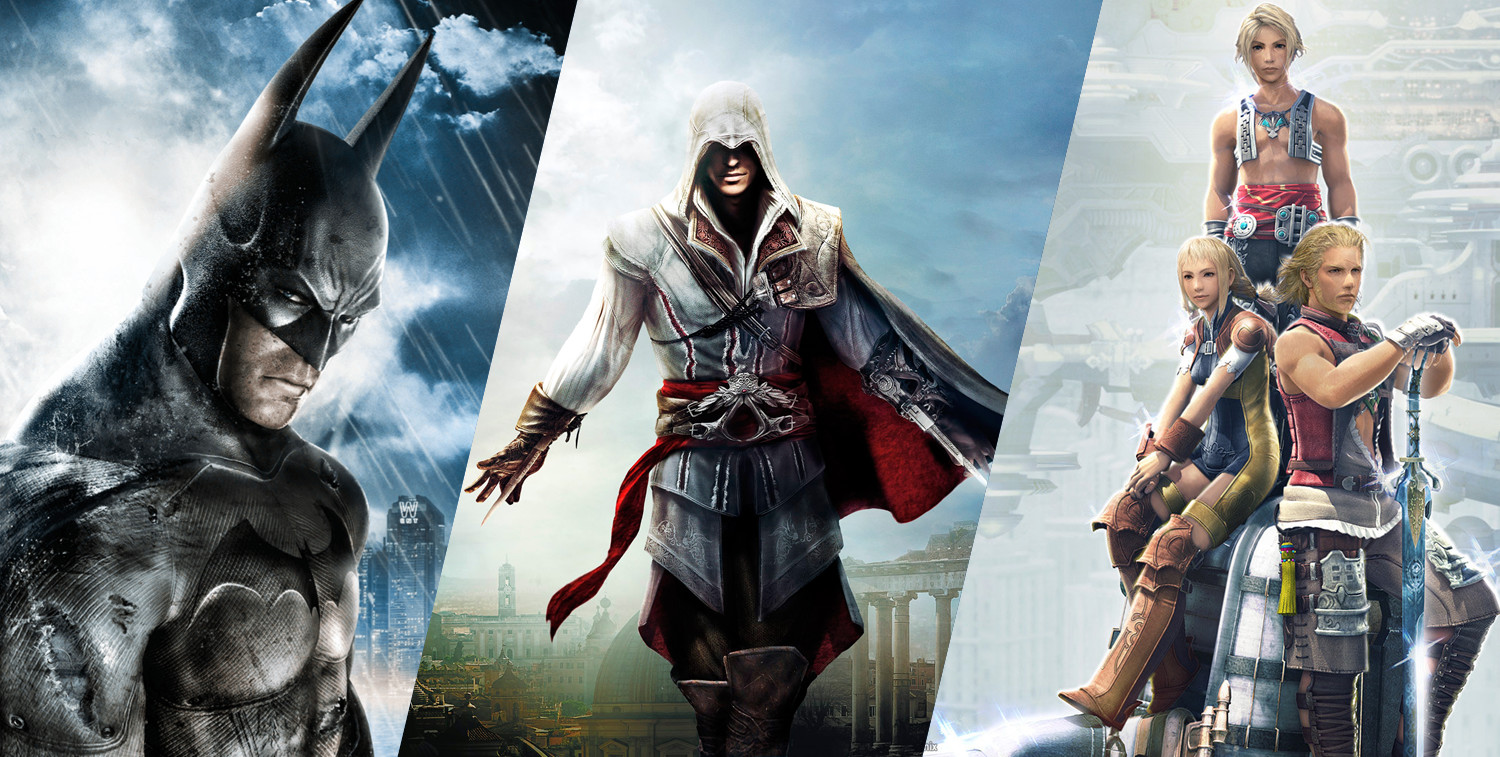
Few producers and developers can claim to work in one organisation on the development of multiple titles as diverse and prestigious as Batman: Return to Arkham, Assassin’s Creed: Ezio Collection and the Final Fantasy XII The Zodiac Age – but that’s the case with Richard Turek, with many more AAA titles to come.

There’s a strong appetite from the world’s biggest games studios to want to make bigger, deeper, better games, through parallel development on multi-platforms, full level design, downloadable content packages – or resurrect classic titles through remakes on new platforms. Either way, Richard and the games teams have a proven process and deep expertise in the field.

AAA Games – Forte of Virtuos

The current team of 40+ people is developing full levels and what Virtuos calls “exotic gameplay” with a top North American developer for an upcoming AAA adventure game. The game is scheduled to release autumn this year.  Exotic gameplay is a term, coined a few years back, where game teams (through intelligent partnerships) can add quality, depth and substance to their projects, above and beyond what they may have scoped out with their internal resources. 

Integrated External Resources

There is a sense at Virtuos that its partners are seeking a lot more than a simple staffing solution for their ambitious projects, these days. They want passionate, diversely talented teams that can drive a project as hard as any internal development team, and become an integral part of the organisation and projects.

This is especially true for parallel development projects where it is not just about making Art assets, weapons, vehicles and buildings, but about true co-development,  where creative input and strategic decision—making is a collaborative process between the games companies and their external developers.

“Starlink” - One of Virtuos‘ Many Parallel Development Projects

These companies now make it clear from the beginning that they aren’t looking for a flexible talent pool, but an extension of their own development team, a partner just as dedicated as they are, to making the best game possible. The depth of the relationships reaches new levels, and with access to proprietary engines and pipelines deeply integrated between the two parties, trust is a must.

There’s a strong will that companies like Virtuos become true extensions of core dev teams.  It’s easier said than done, but there’s a real need from developers to build these long-term partnerships because nobody wants to micro-manage 10 or 20 different vendors!  It takes time because teams get to know each other on a different level – getting in deep on core tasks, like sharing the backlog, task progress and risk log as one team. The belief is that driving conversations across different departments: Art directors, tech directors, Design Director, leads to a greater chance of success and true integration.

Goal Setting and Enablement

Staying focussed on shared goals has also lead to a high degree of success. During the collaborative creative process, there is nothing worse than having someone respond with; “that’s going to cost more money’’ when something is out of the agreed scope. Everybody knows how development works and that time + resources = money.

Game development can be fast and fluid, especially when the core teams are trying to “find the fun” to delight the end-user. For success, teams should expect rounds of iteration and must plan for it and embrace it. Obviously, when changes impact deadlines, sensible dialoge starts and the joint teams come up with options to achieve the best path for the game.

It’s clear the mammoth games companies know how to make great games - but companies like Virtuos know how to enable success. With over a 1,000 projects under its belt, Virtuos has seen it all! The company accesses and works with a huge amount of data, and adapts to different pipelines and genres to come up with custom solutions for each project. At the end of the day, AAA studios who want to make their games bigger while increasing their ROI will rely on major partners for their expertise in specialised game development services as well as flexible development work.

A key to successful AAA projects can often drill down to the strength of the personal relationships, and Virtuos truly believes in the continual flow of communications, dialogue, reporting and discussions across internal and external dev teams. If this is combined with a genuine will to be flexible and adaptable, at any stage of the project, good things start to happen – but it’s truly on the developer to offer this flexibility and understanding to support the client’s needs and even pre-empt them!

Quality Drives Success

Flexibility and the Personal Touch

A simple, more personal touch, is taking the time to get to know the team members. Getting to know one another, can help tremendously, as it builds deeper trust and even friendship! Chances are there will be regular communication with these people for the next 1 – 2 years. Being personable can help to smooth communication while still being professional. Instead of diving straight into the agenda, spending a few short minutes amount of time catching up, builds much-needed rapport.

In terms of being adaptable and flexible, Richard and his team recently completed a project that had a pre-existing, fairly unique, custom way of building levels. This process was completely new for his team whose entire experience was in the traditional level building. However, they were eager to adapt to the way their partner worked so that they could integrate seamlessly into their pipeline.

Before starting the project, Richard started with training and helping the team to adapt by getting as much documentation about it as possible, to build a list of carefully defined deliverables for each phase of the process. The next step was to collect in-game videos from previously created levels showcasing what to expect at each stage of the process. These videos helped to give a visual reference and made it much easier for everyone on the team to understand the expected requirements and work towards it. By the time the team completed their first two levels, they were experts in the process. In the coming months, production doubled in scale and the team adapted their milestones and deliverables around their partners’ pipeline.

Finally, a well-defined feedback loop can be critical to the success of a project and should not only happen at the end of the project but throughout the whole process. To find out what is and is not working and then ask for constructive feedback helps to improve relationships and make the project go smoother.

Sharing feedback early can save time and anguish at a later stage - there is no benefit to waiting until something is 100% complete before sharing opinions – and clients value the feedback. Providing updates throughout the creative process helps to give context and rationale for how to achieve the best possible results; highlighting issues encountered and how to fix them.  Sharing early ensures expectations are met and allows partners to speak up if they think it is going in the wrong direction – saving everyone from wasting time and effort.

 In conclusion, the successful co-production on a game really is a matter of the co-operation and drive of several teams to do all they can, in their power, to initiate healthy collaboration and feel like one team. The “Them and Us” scenario is a long-forgotten ancient history, and in this era of simple integration and easy communication, should never rear its ugly head again!

Thorough Planning and Great Communication!

About Virtuos

Founded in 2004, Virtuos Holdings Pte. Ltd. is a leading videogame content production company with operations in Singapore, Canada, China, France, Ireland, Japan, Korea, the United States, and Vietnam. With 1,600 full-time professionals, Virtuos specializes in game development and 3D art production for AAA consoles, PC and mobile titles, enabling its customers to generate additional revenue and achieve operational efficiency. For over a decade, Virtuos has successfully delivered high-quality content for more than 1,300 projects and its customers include 18 of the top 20 digital entertainment companies worldwide. For more information, please visit www.virtuosgames.com.

About Richard Turek

Serving as Senior Producer at Virtuos Games, Shanghai.

Richard has over 8-year’s game development experience. An expert on multi-platform development, project schedule management and Budget & Scope management, a seasoned leader and supervisor of large, multi-disciplined teams. With an eye for quality, detail and fun. Leading the charge to build exceptional games!

Virtuos Experts Talks #1: The Balance between Artistic Expression and Project Efficiency Needs Careful Management to Drive Success in AAA Games and Movies

Article / 17 July 2018

The first of a series of regular articles highlighting the learnings and best practice from Virtuos' global development, Art and VFX teams.

In this instalment, Nicodemus Mattisson, Director of Virtuos' concept Art Team, talks in-depth about how to balance the common conundrum between artistic expression and project efficiency.

"Playing tag with Old One Eye" by Nicodemus Mattisson

As concept artists, we use the world around us for inspiration and try to find new and interesting ways of re-assembling these inspirations and sources into content that engages players and viewers emotionally. Whether that is designing the airlock on a space station quietly orbiting an alien planet in a game or the empathetic sidekick teddy bear holding your hand through a dark forest in a movie. Or perhaps a combination of all of that.

In crafting new worlds and the characters that populate them, the rule you'll hear from any seasoned designer is not too deviate too far from the things you know. Your knowledge forms your understanding of the world and makes it relatable to you in meaningful ways. Some forms of knowledge are highly individual while others are universal, giving us as designers crucial tools in forging experiences that engage.

Skill, Practice and Feedback

Working to create these kinds of experiences takes skill, practice and consistent feedback and one of the things that designers of other types of media often overlook is the collaborative nature of game development where many disciplines come together to mesh graphics, code, sound and input together.

These are vastly different disciplines of work and understanding the larger framework they support and the limitations they pose on you as a designer is of great importance for seeing the original vision through.

In recent years Virtuos has championed a position known as "Closing the gap". This is a holistic approach to the work of crafting worlds and assets by closely emulating the production practices of the department or client we support.

One example would be our heavy emphasis on 3D tools, allowing 2D artists to construct their sketches in 3D for perfect linear perspective or using a standard body 3D mesh with some sculpting and poly-painting on top, to quickly visualize the shape and colour of a clothing piece or armour with perfect anatomical precision.


WIP 3D Model of "Stroggs 2016" by Nicodemus Mattisson


Painter Become 3D Artists

Production tools have become increasingly simple to use for the past fifteen years, so that even a classically trained painter can create complex materials and apply them to a 3D model with ease, with the abundance of ever-increasing compatibility. There was a time where the digital painting was just transitioning into interest by traditional painters. Online forums and blogs filled up with great artwork, but it took quite some time for the community to accept new workflows and ideas of improving upon the efficiency of the methods which they were using.


Final Concept Artwork of "Stroggs 2016" by Nicodemus Mattisson


It is this very mindset that has been nurtured in the Concept Department, in allowing our artists to train both as 2D artists brushing up on their fundamentals while also understanding how to effectively use 3D and rendering software to aid in production. The positive effects are apparent; It brings artists closer to 3D pipelines and offers the ability to hand over a rough model of work to the 3D artists, saving time and effort for everyone involved in the asset pipeline.

It also allows artists to focus on what is relevant and not be interrupted in their flow of ideas. Through empowering artists who might find a particular fundamental skill tough to wrap their heads around or time-consuming, it provides them with the opportunity to not only bypass the complexity of drawing it but also to experiment with designs, produce variations and deliver something with a higher degree of accuracy.

About Virtuos

Founded in 2004, Virtuos Holdings Pte. Ltd. is a leading videogame content production company with operations in Singapore, Canada, China, France, Ireland, Japan, Korea, the United States, and Vietnam. With 1,600 full-time professionals, Virtuos specializes in game development and 3D art production for AAA consoles, PC and mobile titles, enabling its customers to generate additional revenue and achieve operational efficiency. For over a decade, Virtuos has successfully delivered high-quality content for more than 1,300 projects and its customers include 18 of the top 20 digital entertainment companies worldwide. For more information, please visit www.virtuosgames.com.

About Nicodemus Mattisson

Serving as Concept Art Director at Virtuos in the wonderful city of Chengdu. With broad knowledge in concept art, matte painting and art production work, Mattisson has worked in the game industry for about 14 years serving high-profile AAA clients to indie studios visual benchmarks and assets for their interactive products and animation.